Writing: Not Seeing the Forest for the Trees

It’s true: sometimes you must step away from your work long enough to gain a different perspective.

This is why writers seek feedback. (Perhaps not all writers, but this one does!) We use our family members and friends, look for critique groups, employ the use of editors and book doctors – basically run our manuscripts through the wringer and then some. Some use feedback to gloat and marinate in praise. I need it because I see the value in being slapped silly every now and again.

Take my good friend, The Little Fluffy Cat. She’s not really a cat, but a great writer, and on top of that, a kick-ass editor. I’ve emailed her passages and she red-lines and returns them in minutes. “No, this won’t work.” “Adverbs?” “Purple here.” (These aren’t quotes, but it’s along those lines. Plus there’s many strike throughs. I can almost hear her sighing from Texas.) I don’t ask her often, because she’s a busy woman. I ask her when I need an unvarnished review. I’m not sure what she really thinks of me, but I must be somewhat amusing because we’re still friends after all these years.

It smarts a little to read a LFC edit, but she’s 100% right.

And while I have an Editor for Life, I like the idea of another pair of eyes. I’ve signed up for classes to work on my manuscript, one that’s already been through the editorial process. MANY times. I am thinking that my ED may be too close to me to give me an unabashed review. (He likes me. I like him. As a person, not just an editor.) I suspect my ED is like me, the writer. We are too close to the trees to see the forest. (Or too close to the forest to see the trees.)

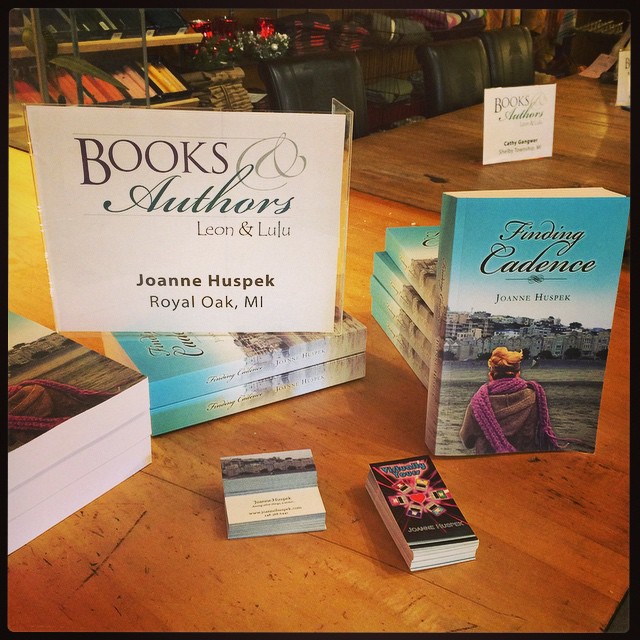
Recently, I signed up for a Savvy Author mentoree class for my manuscript, Finding Cadence. The current edit is better, much better, but I’m going for making this manuscript the best I can. While waiting for my Book Doctor-Mentor to read the manuscript, I hurried to finish the current edit.

Then I put the book away.

She called me a week or so later and we had a nice chat about what she liked, what she didn’t like, what was unclear, and what could be improved. New Eyes Hillary pointed out a few things that were true, basically the sapling trees I’d forgotten were in my forest. She had me send her an outline. This took a while, because the outline saved on my computer was a few incarnations of this book ago and the middle and end was nowhere close to what it is now.

Again I put the book away.

Lately I’ve been working on a different edit. My brain has been full of Cadence for the last six months. It’s time to give it a temporary rest, while I pursue some other work.

If your work is starting to look like a blur of green, step away from the forest. When you return, it will be that much clearer.

Change: Not Bad, But Scary – So USE It!

Celebrating the fact that I’ve been writing every day this week!

As I alluded to in this post, a writer can make use of the rigors of daily life as a tool.

Thinking about rigors, I realize most emotion springs from one thing: CHANGE.

Some people don’t like change. They think change is bad. If you’re old, you want life to stay as it was “in the good old days.” If you’re young, you don’t want to leave your mommy and go to school all day. No matter what the scenario, if you like a situation and it changes, the immediate reaction is of repulsion.

Let’s face it; change is damned scary. You’re enjoying your life, comfortable in the status quo, when suddenly a gust of wind (change) knocks you off your moorings and into the unknown.

How dare there be change! Right?

Writers should take advantage of the gust of wind and note their emotional response.

Example: Your marriage of many years threatens to disintegrate. You get news that a close family member has a life threatening medical condition. You make one small mistake and end up totaling your car.

It would be SO EASY to wallow in the emotion of your change. For example: damn it, but I’ve given him two decades of my life! or how will I live without my mom? or I hate walking, and that guy (uninsured, of course) in the other lane is a jerk for hitting me! Instead of marinating in emotion, write down the emotion of your change; the hurt you felt when you learned of the infidelity, the vulnerability of abandonment, the loss of your family member, the rage you feel knowing the insurance won’t cover it and you have no money. Your characters will need to express these things, once you, Author-Person, gets down to the business of weaving the bits of your ideas into a viable story.

It doesn’t have to make sense; it doesn’t even have to be sentences or paragraphs. It doesn’t take long, and it doesn’t have to be pretty. On the off occasion when I don’t have a notebook, I’ll jot down my winds of change in my iPhone notes.

There is only so much time in a day. Make use of it.

With Real Life to Contend With, How Can You NOT Write?

Once, two, maybe three years ago, I suffered from a case of Lack of Writing. I refuse to call the inability to string a series coherent sentences outlining character and plot ‘writer’s block’ – I wasn’t blocked as much as I was overwhelmed/tired/bored/busy/juggling/severely ADD. After several weeks (or maybe months) of N-O-T-H-I-N-G – not a chapter, not a paragraph, not a word, I emailed my ED, throwing him an SOS. I couldn’t believe I was without WORDS. Nice guy, he offered an online intervention, but since I haven’t been able to sign into my Yahoo! account since 2009, getting to the messenger for my wake up call was daunting.

He probably could have called me to jump start my flat-lined ambition, but he didn’t have to. While in the middle of figuring a way around Yahoo! (lowly step-brother of that demon-child Google), something happened. Something epic.

I began to write.

There was no “ah-ha” moment, no light bulb over my head. No dynamiting the log jam, or self-abuse. Somehow, some way, without prompts or nudging,  somewhere in the puzzle of getting hooked up, I wrote.

I must admit that I do love a good writing prompt. I have a whole book of them I can turn to in case of brain freeze. A writing competition is a great tool for getting the juices flowing, especially if you get a friend or two involved. But sometimes LIFE is more than enough impetus to write. Even if it threatens to bury you. (Especially if it threatens to bury you.)

The past few months have found me in that lazy/overwhelmed/tired/bored mode. Sometimes it’s  hard to get excited. Sometimes your creative energy is sucked out of you. Many times there’s no TIME. Writing, as all my  creative pursuits, is an indulgent luxury. (I hope it always is.) Many pressing tasks stand between me and my computer and three hours of peace and quiet. I’ve taken to notebooks and writing quickies when I have a minute to spare.

This is my life the last few months: business, people quitting, friends and family contending with illness or other challenges, drama and more drama, money (or lack of), a crumbling house, the police and jail (don’t ask) – with all this Real Life to contend with, how can I NOT write? The only things I haven’t experienced in the last few months would be dragons, murder (although someone did threaten my husband’s life), and vampires, but there’s always tomorrow.

Today my temporary Lack of Writing has officially ended. I’ve been writing like a fool ever since.

Look out, world.

An Omen: When Your Dog Soils Your Query

It’s a beautiful Sunday in the neighborhood, and while the sun shines and the temperatures are mild, I figured I would get up early and finish weeding and planting my vegetable garden. I made significant progress yesterday and want to finish NOW, so I can enjoy the fruits of my labor.

Gardening used to be a lot easier when I was young(er). I bounced out of bed today with an aching shoulder and a bum knee. Still, I’m on a mission – to eradicate weeds and plant more tomatoes. (Sorry. It’s my Army brat upbringing. Plus, you can never have too many tomatoes!)

On my way to locating my tennis shoes, which were next to my laptop and a six inch pile of printed manuscripts waiting for me to edit, I noticed that my dog had a gastronomical accident. On two pieces of paper that had escaped the tower of editing. Those two pieces of paper happened to be my query. On the query I sent to and received back and edit from a Big Name Agent as part of the Writers Digest class I took on querying back a couple of months ago.

Nothing says “YOU SUCK” better than runny diarrhea on my corrected query.

This, my writing friends, is an omen. First of all, I should have never left my query on the floor. Secondly, I should have spiffed it up and produced a better query from Helpful Agent’s notes a long time ago. Thirdly, I should really impress upon my husband that feeding the dog steak bones and whipped cream is not good for a Boston terrier.

Of course this disaster could be a more serious omen. Like God telling me I should ditch that particular manuscript (FINDING CADENCE) and perhaps channel my time more wisely into something that has more than a snowball’s chance in hell of making it past an agent’s assistant. Or maybe that I should give up writing altogether.

Yeah. Giving up. That would be the easy way out.

After I finish my urban farming, I’m going to work on my edits, dammit. And I’m going to make serious headway.

Because somewhere in my email, I have a copy of that edit from Helpful Agent.

Take that, Powers That Be. Your nasty little omen is powerless against this writer.

Real Life Bulldozer

I have to admit this, but as a writer, I’ve been really bad.

No, really, really bad. (Note the use of that adverb. It’s doubled, italicized, and bolded for a reason.) In fact, I’m almost a non-writer.

I won’t go into the grim specifics, but let’s just say that Real Life is kicking my ass.

The older I get, the more I realize there aren’t enough minutes in a day. Honest to God, it was just February and my return from the San Francisco Writers Conference last week! Wasn’t it?

I have three edits printed and waiting for me to slice and dice. Okay. So I did get to one of them about a month ago and made some significant progress, but then… yes. I ended up nowhere near my computer as I raced from one end of the world to the other.

So what do you do when life bitch-slaps you and leaves you with no time?

This is what I’ve been doing.

1. Write in my little notebook. The one I carry in my purse, religiously. I jot down ideas, lists, emotions, character traits I want to use later. Names. Places. Smells. Sights and sounds. It takes just a second. Sure it’s not a novel, probably it’s not serious, but every little bit helps.

2. Read. Here, I’m not doing so well, even with Kindle on my iPhone. BUT… I have discovered Audible.com. I am listening to THE FOUNTAINHEAD by Ayn Rand. I’m up to Chapter Three. I mostly listen in the car or…

3. While exercising. Because if you’re not going to exercise your brain, you might as well work out. Not that working out has made this aging hipster a babe. In fact, while losing a pants size, I have gained two pounds. Go figure.

4. Channeling my creativity to other endeavors. You don’t know how beautifully I can scrub soap scum off my shower tile. Of course, I have to break the chore up into four days. I can’t hack away in one sitting. Cooking is another way to expand on creativity, and it doesn’t take much time. Cooking, however, is fraught with pitfalls. According to my husband, who rails against my creme brulee or cherry duck, I should stop cooking altogether. But when I do, he gets mad.

5. Gardening. It is somewhat time consuming, but at least there are edibles at the end of the season.

6. As a writer, you should give yourself a simple, stupid-easy to accomplish task to achieve daily. Mine is THIS. I know. It’s frivolous, it’s silly, it’s dumb even, but it only takes me five minutes.

7. Buy a tool to help you in your quest to write. My current is 642 Things to Write About. I picked this book up at the airport in San Francisco on the way back from the writers conference (like I needed extra books? my bag was stuffed full of books -and wine), for a couple of reasons: 1., I am a HUGE Chronicle Books groupie, and 2., I often find myself without writing prompts. In fact, I just filled out a page yesterday.

Writing during real life can be done, although, the road isn’t exactly a scenic drive on new asphalt.  When the bulldozer threatens to mow you down, push back, even if the only tool you have is a child’s beach shovel.

It’s the only way to write.

Diversion: Things I Would Rather Do Than Write a Query Letter…

Get this: I have a finished manuscript on my hard drive, one that I really like, one that I slaved over for YEARS, one that I think is ready for the Big Time (at least, for publishing), one that I have stripped and clipped and polished and buzz sawed and tightened and dreamed about, and I’m at an impasse. I can’t seem to get myself to send it to query.

Why?

Because although the manuscript is good, my query is not. And I’ve been laboring over the query just as hard as I have the actual story. Yes. I started working on the current incarnation of my query letter in December. I even took a Writers Digest webinar on query letters, and received an edited copy of one of my incarnations back from the agent holding the class. I also have several writers who were kind enough to critique my letter, writers from many different genres. And I gave the query letter to my MR. ED, hoping he could add his own spin.

I’ve researched the masses and masses of info online, for hours and hours, and have come away with killer headaches every time. I’d pull out my hair, but I don’t have much left. I can’t spare a single strand.

I honestly have at least a dozen different query letters for the same query, ranging from bare bones, here’s the story, here’s my contact information, to business letter snappy, to a mini-synopsis wedged into two paragraphs. I’m not happy with any of them. (I’m happy with the story, not with the queries.)

The query letter is a fine art all its own. A good query letter conveys a great pitch. Katharine Sands (high powered agent whom I’ve met and observed in workshops) says the pitch must ‘pop.’ It has to sustain enough pizazz to capture an agent’s attention, leaving God (I mean) he or she, clamoring to read more. I understand that publishing is a business and businesses survive only by making money, and that agents and publishers tend to gravitate toward that goal, meaning a manuscript and a writer who is succinct and shows promise. Querying is very much like selling your idea.

You know me, I’m not much of a salesman.

Honestly, what if your story is ‘pop’-less? What if it’s not about dragons, demons, vampires, dystopian future worlds, wild bondage sex, wizard man-children, war, pestilence, charmed city girls with a closet full of designer shoes, or impudent teenagers? What if it’s about a woman and her personal struggle, internally, within her friends and family, and/or with an external force dogging her? (Novels I like to read, by the way.)

Enough of my rant: It’s Monday and I have a minute. Quickly (before the phone starts to ring), I will list a few things I would rather do than write a query letter.

1. Laundry.

2. Vacuuming.

3. Dusting.

4. The dreaded once a year pelvic exam.

5. Picking up dog poo.

6. State audit.

7. Day Job work.

8. Working on the new manuscript.

9. Devising a complicated spreadsheet for the other half.

and last but not least:

10. Poke a needle in my eye.

Enough of my bitching. I have a bookmarked page I must peruse.

Onward and upward, query.


Writing and The Art of the Metal Scrap Pile

In addition to writing – like I have time for other pursuits – I also create jewelry. It started out a simple diversion with pretty beads, but has now grown into a monster of another color. I love rocks and stones, I like copper and silver (silver especially now that the price has plummeted.) My creations are, how do we say this? Not mainstream. It’s not exactly steampunk either. Like my writing, it’s… me. Singular, unusual, and me.

Okay, it’s more than a diversion and you twisted my arm; call me a jewelry artist. A crazed one.

Each Tuesday during the school year, I take a metals class at the local art center. This is known as three hours of ME TIME. I’m a busy woman; if I didn’t consciously manufacture time for writing, working out, gardening, cooking, or cleaning, I would not write, I’d be 300 lbs., my yard would be overgrown, I’d subsist on fast food, and you wouldn’t be able to see the floor through the cat hair. That’s why I carve out one teeny, tiny three hour niche for playing with wire (and fire).

My latest endeavor once I get to class is going through the discards box, which normally contains about 50 lbs. of copper scrap. Copper is the provided metal of choice for this studio. (Honey, if I work in silver and there are leftovers, my bits and pieces goes into my own personal scrap pile.) The failed pieces of other classes, twisted wire, sheets of fire patina flat stock, shards of cut copper triangles that are sharp enough to be used in an operating room, I scavenge through for just the perfect shade or color or twist. I especially love the wire I pull out of there; you can’t replicate the compaction and then the freed wire squiggles, even if you tried.

I take home my little gems of garbage that start out like this:

wire

and sometimes I end up creating something like this:

twistedbracelet

It’s the same with writing.

On my computer hard drive, I have bits and pieces of creative moments. Maybe they’re not well formed stories. Maybe they’re failed stories or the beginnings of ambitious novels. Maybe they are observations or opinions or love letters or chastising treatises on the human condition. Maybe they are parts of poems or the chorus of a song that I wanted to finish once I came into close proximity to my guitar. I have a file of interesting names, places, restaurants. I might note the debris on the beach or the sway of black-eyed Susans in the wind or the roiling energy of clouds before the impending storm.

As a writer, there are always times of self-doubt and self-loathing. Unless you’re a big name author, and a super smart one at that, you’re going to find that writing is hard work. You might love your work, but someone else cuts it down. Your real life might take a turn for the worse and you may want to blow up the entire works as a result. I know of writers who delete and start over.

I’m not that type of artist. I can’t be; I’ve invested too much in my art. I don’t have a lot of free time, and I especially have little time to create anew. Besides, it’s worth it to poke around in the scrap pile. From my perspective, some of the best art can be culled from the depths of the trash heap, re-worked, re-purposed, spiffed up and shined to a glossy finish.

It is so worth the effort.

Setting My Baby Free – Or, It’s Query Time (Again)

On a cold day in February in 2007, I walked north along Ocean Beach in San Francisco and snapped the photo that now resides as the header of this blog. (It’s also a framed poster over my bed, where it gives me constant inspiration.)

Later that day, on a Northwest Airline flight to Detroit, I began writing in a notebook. It wasn’t a story, with a beginning, a middle, and an end, it was more a stream of consciousness about my walk on the beach.

When I arrived home, I put my musings into the computer. The seven or eight mini pages grew. And grew, and grew.

I honestly couldn’t write a word of dialogue back then, so my paragraphs were full of internal musings. Since I couldn’t write dialogue, I had eight different POVs…yeah. About 7 POVs too many. If there was a rule about writing fiction, I broke it – in spades, over and over.

When I had 70K words (of which 90% was pure garbage), I finally visualized the story: a woman of common beginnings, longing for love, thrust into a world of money and prestige. I leaned toward writing a romance, until I learned what the definition of “romance” was. There are plenty of romantic elements in the story, but this is no Happily Ever After. My main character suffers. A LOT. There was no room for flirtation in this tale.

The story: Cadence’s husband of many years killed in a car accident. His death uncovers many secrets, the kind that could devastate a strong woman, but they totally rattle Cadie. But it’s not just his hidden life and indiscretions she must wade through – in beating herself over his choices, she discovers that the compass guiding her own life is severely skewed. She spends a good majority of the book “finding” herself, thus the title: FINDING CADENCE.

It took two long years and 176K words (still 75% garbage) before The End appeared at the bottom of the page. Two years – I finished the first draft the Sunday before my first San Francisco Writers Conference (2009), scheduled for the upcoming Friday. If you are a writer you know the feeling of typing those two magic words; you’re on Cloud 9 for days. And I was going to attend my first writers conference. I was giddy beyond belief.

I was. Until I realized The End is just The Beginning.

Especially if you attend a kick-ass writing conference like the SFWC. I learned in two and a half days that my work was so not ready for the big time.

With that cold slap in the face, I put the manuscript away. And cried a little. (Let’s be honest; I cried a lot.) At first I’d shuttered it for thirty days, but when I peeked at it again, it was so awful, I put it away for a YEAR. I honestly thought my writing “career” – such as it was – was over.

After many online classes, another SFWC, a new manuscript (VIRTUALLY YOURS, totally different in feel and genre), and much prodding by my writing friends, I decided to give it another go. Opening the now dusty computer file, I discovered that while the execution was terrible, the story wasn’t half bad.

There was editing. Once, to get rid of redundant words, the adverbs, etc. That chopped off 10K post haste. The second go-’round I changed the POV from eight (maybe nine) to ONE – first person. The third, I cut, and cut, and cut some more. By this time the result was about 50% garbage. So off it went to not one, but two editors. I meditated  on this story – A LOT. As there is a musical component, I listened to a lot of music, especially Rachmaninoff’s Piano Concerto #2, and the subsequent modern day rip off riffs from the common themes of the piece. Like Cadie, her life appeared to undulate much like the three movements of the concerto. And so I discovered my theme!

I visited San Francisco many times, to get the feel. Also returned to Colorado, because the feel of the High Plains is NOTHING like San Francisco – or Michigan.

I also ran the manuscript through a Savvy Author class, devised a workable ending that made sense. When it was down to about 20% garbage, it went through another developmental edit, and voila! what I have is what I have now. (Hopefully with less than 10% garbage.)

So you can see how I view my work as my baby. :-)

Now it’s time to set my baby free. Look out agents, the queries are coming, the queries are coming.

Soon.

What’s In a Name? Just About Everything!

Funny this article came through my email blast today, regarding naming your characters. Just in time, right when I needed it.

(As an aside: “Grayson?” Are you kidding me? I would have never come up with such a name. George, maybe, but never Grayson.)

I’m in awe of writers who can come up with witty names for their characters. They’re also the ones with inventive Twitter handles and email addresses. I am notoriously terrible when it comes to character names (and Twitter handles and email addresses – it’s j-l-h-u-s-p-e-k for everything). I usually use something generic and stupid, until I’ve finished the piece and start the first edit. Then inspiration might hit me like a bolt of lightning and I might come up with something more interesting. Maybe. Maybe not.

Now that I’ve finished my second edit of Finding Cadence, I’m seriously considering name changes. The manuscript is almost ready for querying, and I don’t want to saddle my baby with character names that are humdrum. I can just see some agent looking at my query and saying, “Maggie? She couldn’t think of anything besides Maggie?” I must give the name process careful consideration; after all, this book is my labor of literary love. When I first began writing, the original name for Cadence’s two-timing husband was “Tom” – as in my brother Tom. I love you, Brother Tom, but the name is BORING. Then my daughter went away to college and hooked up with an a**hole surfer boyfriend from Marin named Carter. After a bit of drama which included several tickets he incurred on her car and a trip to the emergency room (accompanied by a panicked phone call in the middle of the night), I decided to rename my errant-husband-character CARTER. Fit perfectly, and gave me more than a smidgen of satisfaction to click “Find-Replace” with such wild abandon.

Actually, I labored over Cadence’s name for a long time. I started writing the story without a first name, that’s how bad I was. I wanted a musical inference, and Harmony was too cheesy. (My apologies to anyone named Harmony. It’s not personal, honest.) Melody is Cadence’s sister’s name. Then I opened up my son’s Dictionary of Musical Terms and Cadence popped out at me. Now the name makes so much sense, since she didn’t feel any harmony at all for the duration of the story, and her life’s cadence endured its shares of ups and downs.

I might have to rename “Bill,” Jackson’s (Cadie’s son) roommate. I just don’t like the name, it doesn’t fit the character. The character is a big, lumbering, old hippie type. Smart, laid-back, and mildly attractive. Teddy, perhaps? Jerry? Kenneth? Definitely not Fabian.

In Virtually Yours, I ended up renaming just about everyone. Diana became SKYE, Lori became LAUREN, Scarlett became RHETT. (In that case, there was a gender change as well. Don’t ask me, just read the book to find out.)

By the time I’d penned Oaks and Acorns and Acorns and Oaks, I’d already started with kick-ass main character names. Amberly Cooper. Maya Cooper. Clementine Bartlett. Of course, I’m not happy with the sister’s name. Martina. Don’t like it. I’ll probably change it someday. I also will have to change the name of Amberly’s love interest, Trent, and probably Grandma’s. Don’t like either one.

I tend to draw upon my real life peeps for names, which might be why I’d gravitate toward George rather than Grayson. My choices may be thinly or heavily disguised. For example, Jackson’s girlfriend’s initials are M.T., just like the initials of the Real Life girl I based her on. Or I might name someone after a place I’ve been. Blaine comes to mind.

Come to think of it, I had a difficult time naming both of my kids. We called our son “Baby Boy” and wouldn’t name him until the hospital threatened to not release him without a name. And while I came up with my daughter’s name while she was still in utero, we ended up changing her middle name from George (there I go again) to Cristina. It wasn’t what I wanted, but I wanted to keep the peace.

Perhaps I name my characters lamely because they are just germs of ideas, not full fledged people, at least, not until I take them out for a spin and slap them around a little. I saddle them with emotions and problems and flaws they must overcome. Only then do they somehow morph from a two-dimensional thought into a many-layered organism.

Readers: Are They the Exception or the Norm?

The one thing I enjoy about the San Francisco Writers Conference are the contests. Yes, I enter, and yes, I’ve had mixed results, but that’s the whole point. How will you know if you’ll win or not unless you try? I’m also impressed that they hold a similar contest for high school students. Even though I don’t currently have any high school students, I was once one – a long, long time ago.

I have, in fact, told stories as long as I can remember. I like to draw, so many of my tales were illustrated. I had a wild imagination, one so off the beaten path, that in 7th grade I was expelled from Catholic school because of a rather racy short story I wrote that got passed around until it landed in the hands of Sister Mary Ruler-Slapper. (I can laugh about it now, but my mother didn’t speak to me for three months.) It was so bad, I was not only banished, but so were my siblings.

My shortcomings were not in writing, they were in speaking, which is why I never said a word during debate class. However, I read voraciously, skipping right over anything age appropriate and going straight to the classics. The “harder” the book, the more I wanted to tackle it. Book reports: in 4th grade I wrote nearly 30 of them, for extra credit and because I loved to read. That’s more books read than there are weeks of school.

In my junior year of high school, I decided to enter the city-wide Junior League Creative Writing Contest. Okay, so the city was Colorado Springs and not the Big Apple, but it was a big deal to me. My short story was a dystopian, future set tale of a broken down world and one man’s love for a priceless antique chair. I dug it out of the basement about a year ago and typed it — it was TERRIBLE. How did I win Second Place?

I have no idea.

Now I am old(er), and starting to sound like my dad. I am concerned about the reading abilities of our children. I deal with teenagers all the time in my Day Job, and I had two children. As a writer, I’m fearful for these new readers, my potential audience. Many of them can’t read because they were taught some cockamamie theory when in kindergarten. I’m surprised my son can read at all, because at the time, “inventive” spelling was all the rage. He was encouraged (by the school) to spell words however he wanted to. On the other hand, I, as the mean mom, would make him write his spelling words twenty times and then grill him in mock tests. (What can I say? I’m half-Japanese.)

Other kids are dyslexic or have ADD. This would be my daughter. She would read out loud perfectly, but would write out of context or not retain one iota of information. That’s because her mind was thinking about something else – it’s always thinking about something else. She doesn’t enjoy reading, and the only way I could get her to ‘read’ Harry Potter books was to buy the accompanying audio books so she could read along while listening.

My children didn’t grow up deprived; we read to both, all of the time. We supplemented what they were learning in school (had to, even though they went to private schools). We could afford books and I bought plenty. Yet, I believe that neither one (for whatever reason) could read to my ability in 7th grade.

Sure, kids these days read, and the popularity of the Hunger Games and the mad YA market are testament to that. But my own kids have been in “reading” classes where they watch the movies the books were made from – not exactly reading.

I live in the Detroit area, and the city schools have notoriously low graduation rates. Many of the kids I see come through here can barely write their names. Some can’t spell or pronounce the streets they live on. They can read abbreviated text messages, but have no idea how to read a book for the enjoyment of it. Suburban kids might fare a little better, but the standards are still mediocre. Some kids (and adults) these days want to do the least amount of work, to just do enough to get by.

I place advertising in school newspapers, partly because I am a product of several school newspapers (junior high, high school, and college), and partly because I like to read what the current crop of kids are writing. Most of the writing is good, witty, relevant. However, one by one, I am seeing school newspapers being dropped as a class. One advisor told me it was not just the money, but the school spends a good deal of time trying to get test scores up, so they drop the classes that don’t apply to the state test, like newspapers, wood shop, home ec, etc.

The result is kids who can’t create because they aren’t given the chance, and not given the chance, can’t improve their minds. I don’t know if what I’m seeing on a day to day basis is an anomaly, or if it’s a trend. The other question that lingers is if these are writers of the future, what will become of books? What will become of opinion, or art?

That’s why when I see articulate, intelligent teenage writers at the San Francisco Writers Conference pick up their awards and get recognized for excellence, it quickens my heart, if only temporarily.

I still have my fingers crossed.

Another Kernel of Wisdom via the San Francisco Writers Conference

I know. I am pitifully behind. That’s because I’m semi-recently returned from the 2013 San Francisco Writers Conference. Thanks to this great conference, my head is *b-u-r-s-t-i-n-g* with ideas. Unfortunately, having been out of town for over a week, the other areas of my life are bursting as well.

Before I forget, I would like to relay the best advice on storytelling that I have ever received, thanks to a SFWC workshop lead by Mary Knippel and Teresa LeYung-Ryan. These are two, very smart ladies, and I don’t love them because Mary and I shared lunch and Instagrams of Mark Hopkins’ famed room service hamburgers, or that Teresa is so effusive, she dragged me into a photo after last year’s workshop.

Are you ready? Because this is the wisest sentence I’ve ever heard about writing:

Someone we care about wants something very badly and is having a difficult time achieving his/her goal.

Honestly, it was a lightbulb-over-the-head moment. (Yes, I know. I’m slow. That’s already been established.)

Wiser words have never been spoken. Okay, so you can study hard and obtain a Masters of Fine Art in literature. You can take all the classes on story arcs and layering and the intricacies of denouement the world has to offer. You can belong to the critique group made in heaven (I’d have Edgar Allen Poe, Ayn Rand, and Carly Phillips in my fantasy crit group), or to national writers organizations. You could line the basement walls with past issues of Writers Digest. You might even be able to lock yourself in a room for eight hours straight with no internet and no distractions and tap at the keyboard until your fingers atrophy. You can hang out at conferences and learn from the best.

You can do all these things and more, but if your story cannot be told in this simple sentence, you don’t have a compelling story.

I grew up eons ago, when creative writing teachers claimed a good story had to have conflict – man against man, man against nature, or man against himself. I’m also a fervent believer of having a beginning, a middle, and an end. (You wouldn’t believe some of the writing I’ve read that has none of this.)

Someone we care about [protagonist] wants something very badly [possible end result] and is having a difficult time [the journey] achieving his/her goal.

It’s so simple, I’m wondering why I’d never considered it before. Like, DUH. No wonder I had a difficult time writing the first novel. (By the second one, I’d kinda-sorta figured it out. By the third, I’d fleshed out stories for each of my characters before sitting down to write.)

My new mantra also makes for an excellent measurement for the casual elevator pitch or for the first sentence of a query letter. Breaking down your story to its most basic form (a single sentence) crystallizes the concept, making it easy for the prospective agent to see what the heck your story is about.

I spent the plane ride back to Detroit devising a simple sentence to explain each of my novels. See?

Finding Cadence:

After her husband dies, Cadence Reed tries to find a new normal, but confronted with Carter’s secret life and with finances in disarray, she battles a powerful attorney (and once friend) for control.

Virtually Yours:

A bereaved parent wants to get closer to an online moms’ group, but traverses a minefield of secrets that could blow up the friendship, until the truth finally comes out.

Virtually Yours Forever:

Janna and Ashe are (finally) getting married – that is, if she can lose ten pounds, if Ashe can get over his cold feet, and if the Virtual Moms can book flights through a Snow-maggedon Nor’easter.

Acorns and Oaks:

Amberly Cooper escapes frozen Michigan to her tony life in LA despite a few minor roadblocks: her grandma is crazy, her mom doesn’t want to leave, her Cali friends are uninspired, and oh…she’s 14.

While these aren’t perfect, completing this exercise helped focus my attention on the story, the guts of the matter.

Everything else is icing.


Place as a Character Builder, Tool, and Embellishment

Another San Francisco Writers Conference has come to an end, and just as with the other SFWC I’ve attended, I’ve learned so much. Honestly, they could hold a month-long conference and there would still be things to learn.

One of the workshops I attended was on place being an intrinsic part of the novel. It makes so much sense, you’d think it was a no-brainer. Location description is one tool the novelist can use to transport the reader into the characters’ world.

This is preaching to the choir. I enjoy writing about different places, just as I enjoy reading about different (or familiar) places. As a reader, I want to be able to feel, touch, and smell where the action is. One book that does this seamlessly is the Hunger Games series. I’m a reader not “into” dystopian, teen fantasy, but the author does such a great job of place description (an imagined place), and along with the compelling story, I couldn’t put the book down. In fact, I think about that world even today, months after I finished the series, and compare and contrast the author’s world with the present day one.

I’ve said elsewhere that I enjoy reading stories about places I’ve been. San Francisco comes to mind immediately. I’ll pick up and read any novel with a photo of the Golden Gate on it. San Francisco is a city rich with history, culture, and diversity. The architecture is stunning, the nature of the ocean here is so unlike any seaside I’ve ever been to, and the native plants are intriguing in look and feel. No where else could you find squat trees with gnarled bark, calla lilies growing out of postage stamp sized yards, or trees precariously angled toward the east, their stance shaped by relentless ocean winds. I love the smell of the neighborhoods, the scent of eucalyptus. The people are different, too, a contrast from those in the Midwest, the West, and even from Southern California. Being in the City is an all-out assault on the senses.

Is it any wonder that I love to use San Francisco as a setting? :-) It’s why I return: to get an accurate feel of a driving wind on Ocean Beach, the bustle of Union Square, the squeak of MUNI brakes. Because even though I’ve experienced those things in the past, I can lose the memory of such things.

Because a character is in a certain place obviously shapes the way they behave. In the book I’m working on now, Finding Cadence, Cadie begins life in Colorado in the late 1960s, when the high plains were wide open and wild. Then she moves to Michigan and marries into a rich family and assumes the role of socialite, even though deep down she’s far from it. By the time she ‘finds’ herself, in San Francisco, she is a different person altogether, but probably the truest she’ll ever be.

One of the presenters stated you can use the Internet to help with research on your place. I agree, but only to a point. Some places have to experienced in order to get the correct pulse of place. I grew up in Colorado, and every time I return, some sensation comes to mind that I had forgotten; the subtle shading of the mountains, the way storms roll in, the arid landscape. (That’s why it’s handy to keep a notebook on you at all times!) Also, you as the writer will have a different view of a place than another might. You can only trust the Internet so far.

In using place, be careful; I sometimes concentrate so much on place description, it detracts from the story. It’s because I’m so excited about the place, I want to take you there. As a writer, you don’t want to overload your work with too much description (unless you’re writing a travel book). As with all parts of the novel, the descriptions should be succinct, and your use of words should be judicious. Take your readers there with vivid and realistic portrayals, and let the story begin.

The San Francisco Writers Conference – 2013 Edition

Five years ago I was THIS: an author with a freshly pressed “The End” at the bottom of an abyss-like (and therefore abysmal) tome of 175K words. My first novel. I’d researched plenty of writers conferences and thought the San Francisco Writers Conference was the one for me. Highly touted by everyone, and when my writer pals found out Donald Maass was slated as one of the speakers, they pushed me to attend. It’s held in February, when I can usually take a week off without the (Real) world coming to a crushing end. And my son was going to college there, so visiting after the conference was a definite plus. But I was self-conscious and didn’t think my work was good enough. That was the year I thought, “I’m just going to be a fly on the wall and observe dispassionately.” I’ll become the human sponge and soak up all the knowledge I can.

Yeah. Right.

I must admit, I was star struck, flabbergasted, and so amazed that my head didn’t stop spinning for a month. Agents, writers, editors – genuine best selling authors! But there was more to it than a reporter’s unbiased look at a world class writers conference. As with any love, I fell, deep and hard.

Wallflower no more, I made friends. I chatted with people around the country and around the world. Their positive energy and enthusiasm caused me to step outside of my comfort zone. Even though my draft was a first draft, and needed a TON of work, I signed up for agent speed dating and gave it a whirl – where I learned not only was my book not ready for the big time, I was not ready either.

Tomorrow morning at 6 a.m., I’ll be jetting back to the City by the Bay for yet another conference. This year, it’s different. I’m seasoned. Thanks to the SFWC, I have accumulated a ton of writing friends, belong to the RWA (PRO member!) and Greater Detroit RWA, and have an editor that I work with. I self-published what was my second completed novel last year. I’ve learned to stalk agents on Twitter without having them take out a personal protection order out on me. I’m hooked up with so many helpful writing web sites, and have increased my writing reference library by 10 fold. But just because I’ve attended five years in a row doesn’t mean I know it all.

I’m counting on Michael Larsen and Elizabeth Pomada to host another kick-ass conference, where I’ll learn more than my head can possibly contain (and therefore will take copious notes), be thrilled and encouraged by the successes of others, and jump start my mojo so that I can write yet another day.

They haven’t let me down yet.

:-)

Preparing for the 2013 San Francisco Writers Conference – Yikes!

OMG. I just realized that in one short week, I’ll be packing to go. Am I ready?

Not really, and it’s not just because I realized when my wayward 7 By 7 (code for San Francisco) daughter came home for Christmas that her suitcase was bulging with MY sweaters (I was wondering where my sweaters ran off to…I dry clean them, so they couldn’t have gone the way of missing socks) and I really need to shop for replacements to fill the holes in my trendy, business casual wardrobe – retail therapy I don’t have time for.

No, it could be that my re-write on FINDING CADENCE still is not finished.

That’s because I’ve been tightening and deleting, and tightening some more. Then I had to reread what was left to determine if it all still made sense. I have to balance a tenuous psychological component with the fact that my antagonist is an attorney running for Governor,  so I’ve had to button down the legalities of my story. And I still need to exterminate at least 5K words, to take it from the scary, over 126K mark down to a count that won’t scare off an agent. (I’m fairly confident a little white query lie of 120K will petrify anyone in the biz.) Every once in a while, I drag out my query and take a stab at it. The art of the query is not my major forte. Honestly, it’s like trying to kill an opossum with a chopstick. It’s slow, I’m stupid, and it just won’t offer me a speedy demise.

And while I’m feeling super confident and open to any and all suggestions, I am suffering from the same stomach-trapped butterflies I found in my stomach five years ago – just before attending my FIRST San Francisco Writers Conference. When I was a newbie and afraid of not only agents and editors, but of fellow writers.

Now editors and agents don’t scare me anymore. They’re people, just like me. And fellow writers are the best! They are helpful and kind and many of them stay in touch after our weekend is over. While I’ve made huge strides in my writing, have learned, struggled, written a LOT, queried, even self-e-pubbed, there is still the lingering d.o.u.b.t. You know the drill. Am I good enough? Will my epic tale ever find a home with a good agent, one who has faith in me and my work? Will I ever sell more than a hundred books?

I recently learned I’m not a finalist in the contest this year, another semi-crushing blow (for a minute).

And the final, Big Truth moment? THIS IS MY FIFTH CONFERENCE.

Not that I don’t love it; I do. When I go, I get caught up in the enthusiasm and all the positive energy. I learn something new every year. The SFWC is what I need to drag me out of winter doldrums and writer’s slowdown. No, while the venue is heavenly, it’s just that one would think my learning curve might have improved over time. Over the span of five years (not counting the two years before that I spent on the first draft). Shouldn’t I have been scooped up by now?

Well, I have expended my twenty minutes of doubt and self-pity. It’s time to get back to the edit, and my Honeybaked ham bean soup. And my edit.

See you in San Francisco.

:-)

The Upside to Writing

I will divert myself from lamenting of the woes and trauma associated with writing and trying to get published. Writing is a lot like golf: too many things to think about. Swing, conditions, clubs, stance, reach, etc. Just when you get one thing right, something else falls to the wayside and you’re back to square one. Yada, yada, yada.

Let’s not forget one thing, however; there is an upside to writing.

I’m basking in mine at the moment. :-)

My friend, Edie, wanted to read VIRTUALLY YOURS, but she’s not very Internet savvy and doesn’t have her own eReader, instead occasionally borrowing one from her friend. On a completely random note having ABSOLUTELY nothing whatsoever to do with this post, HERE is her son. (He’s a hottie.) Edie didn’t want to burden her friend by asking her to buy the book on Amazon ($3.59! Now on sale!). It’s only in ebook format, but I just so happened to have a few review copies in the back of my car, leftovers from when I had sent them to a few book bloggers, so I gave Edie one.

It’s taken her a few days to read, but 20 pages in, she texted me and said how much she loved it. Then halfway through, she called me and wanted to be friends with all of the Virtual Moms. (I’d explained to her that I based this book on a real online group I belong to.) Then came another text wanting to know what was up with Ashe. (It’s a spoiler, so I’m not going to say.)

I saw her at my jewelry class yesterday, and she finally made it through the Big Reveal. “I thought **** was ****! And she remarked how similar the Virtual Mom relationships were like her longtime girlfriends she has known for 30 years. Last night, I received a text saying she finished, she loved it, and when was the sequel coming out.

This morning, I received a short voice mail from her, thanking me for allowing her to read my review copy, and that she can’t stop thinking about the characters, they are so real and interesting. Where the story will take them, where will they be, what will happen in the future.

I’m afraid I’m going to have to bring her a blurb the next time I see her. VIRTUALLY YOURS FOREVER, covers all of that and more. Now I am wondering if I should consider writing yet another novel based on these characters. Perhaps, from the kids’ points of view? The possibilities are boundless.

Listen, I know I may never grace the New York Times Best Seller’s List. I might never win awards for my writing. But the glow a writer gets from just ONE satisfied reader provides enough motivation for me to slog on through the mundane or the bad times. The next time I feel writer’s block coming on (rarely these days, but it can happen), I’m going to refer back to this week, remembering Edie singing my praises.

Writing and Finding Your Inner Artist

If you’ve wondered where I’ve been, the editing of Finding Cadence has taken up a lion’s share of my time. Update: I’m still on the second part, although I’m very close to nailing it down, and will then go on to the third part, which will be more like a second edit since it’s so full of new plot twists and characters. The ending is also new.

In the meantime, I’ve finally figured out the RWA PRO loop. I’ve been PRO for over a year, but Yahoo! forums make me want to sell all of my modern devices and go live in a forest somewhere, a forest without electricity. For one, I can’t get into my Yahoo! mail, because my password changed (!) and my attempts to recover are futile. Even when I got into the mail, 90% of it was junk, and I’d spend an hour or so deleting the junk. Somehow, the Yahoo! loop mail now gets transferred to my regular email account. How that happens, please do not ask me. I’m woefully terrible on the computer.

The main topic for the PROs this week was sales, going indie, and more sales. Small house vs. Big House vs. indie, self-pub vs. helped self-pub, etc. The upside of this rather depressing exchange is that selling 100 books is actually not a bad thing (I mention this because that’s just about what I’ve sold). Many, many authors sell that or less. Many, many PRO authors.

I’ve said before that I just don’t get into sales. I have a product, but I’m not going to push it. My lackadaisical attitude probably stems from the fact that when I want to buy something, I despise getting “sold.” Not to decry salesmen (although the used car salesmen are rather slimy-I can say that because there are some in my family) many of whom are great people, but that’s just not me. I’m similarly that way with my jewelry. If people are interested, cool, if not, cool too. In this world, there is art for everyone. I won’t be offended if you don’t like mine.

I might mention VIRTUALLY YOURS every once in a while (currently ranked 519,148 HA!), but I don’t spam my Facebook or Twitter feed with impassioned pleas to buy. I don’t have a “real” author web site, although someday I might, when there is more than one book available. Perhaps if I begged, or invested in blog tours, or passed out freebies, or stood on my head, I could sell more than 100 books.

But…I do not use my creative side to make money (obviously). Being in the business of making money rather sucks. You have to push, sell (a little bit), cut corners, stay within budget, and worry, worry, worry. Oh, we need to make money, and I do it in my day job, but it’s not what I live to do. I’m an artist; I live to create.

Coincidentally, I’m taking another Savvy Author class, this one on The Artist’s Way by Julia Cameron. She looks at writing as what it is: art.

Unlike a job, though, being an artist requires a certain amount of freedom. You must free yourself from all sorts of conflicts (anger, shame) inside yourself. This makes perfect sense to me, and is how I generally look at living, as though it’s a spiritual journey. A person full of fear, loathing, angst, and doubt cannot possibly make the best art. Of course, trying and trying again, perfecting the art, as well as the artist, is the whole point.

And this week, I was also directed by Book Baby to this post by Michael Larsen of the San Francisco Writers Conference and the Larsen Pomada Literary Agency. Creating Your Literary Ecosystem-I liked it! The ten “P’s” of writing. I was so impressed, I printed it out to keep near my computer when I write.

You see, I might never be a best-selling author, but I will truly be the best artist I can be.

:-)

A Writer’s Beware… The Big Bamboozle

I don’t like to address this part of the writing biz, because I don’t look at writing (or any art I produce) as a business, but perhaps we as writers should. My cautionary tale today deals with the Big Bamboozle, or how people and companies can make money off your art, leaving you with pennies for your effort. And getting pennies is the positive scenario. There’s also outright plagiarism and broken promises and contracts. Several web sites and email blasts I’ve received this week deal with this problem. I also attended a Greater Detroit Area Romance Writers meeting on Tuesday, and many of the members addressed the issue.

Let me preface this by saying only that a writer should be aware, much like the adage ‘buyer beware.’ I should also say I know nothing from nothing, only whispers and reports. No decent writer wants to slam anyone, be it another writer, an agent, an agency, a publisher (either e-pub or traditional), because, let’s face it, we might not want to burn a bridge we may need later. But with the economy being tenuous at best and the publishing world now a cyber as well as a brick and mortar experience, the likelihood of getting scammed increases exponentially.

I am excited to write. I love it. I like creating a world that started out residing in my head and ends up living in an actual document. I like learning, too. Writing as an art is a learning experience. However, I’m kind of fuzzy on the mechanics of the business. Who wants to bean count anyway? Keeping track of sales is boring. And if you’re like me, you trust in the judgment of others, especially in names that are big, or purport to be big.

I self-e-pubbed my first book, because after a year of querying, I knew it would never be traditionally published because of a lack of narrow genre. It’s not a romance, but has romantic elements. There’s a mystery component, but it’s not a suspense. Chick lit? Well, maybe, if the chicks are old enough to have grandchildren. It’s definitely not literary fiction. It’s a beachy read. There were too many characters. Ya-da, ya-da. There was also the element of being based on the Internet, and the Internet was changing with every keystroke. I also have a sequel in the works, where I’ve updated the technology, but this is a losing battle, as anyone who has bought an i-Anything can tell you. You walk out of the store and *poof* it’s already an antique. So you see how this paragraph alone is enough to send most agents scurrying into the netherlands.

I’ve lately heard a lot of negative press about a lot of presses. This concerns me greatly. I actually spoke with the CEO of one of these firms, several times in person, during the course of several writers conferences. He seems very down to earth, very honest, very helpful, promised to do a good job, yet how could his company garner warning articles all over the Internet? Of not paying on time, not paying at all, providing false documentation as to how many books were sold, etc.?

I will not include links to these articles, on the off-chance that the reviews are specious sour grapes from disgruntled customers; however, I will say this, DO YOUR HOMEWORK. First of all, Google (or Bing-that’s my favorite) “writers beware.” What will happen is TONS of web sites will pop up. Peruse them, study them, keep them as bookmarks for later searches.

Secondly, if you know any writers, ask them if they’ve heard anything about a particular agent/publisher. Published authors have the inside scoop. They won’t want to tell you anything negative, at least the ones I know. Take their comments with a grain of salt, but investigate.

Third, if you’re considering any form of publishing, whether agented or not, read the contract. Understand the terms. If doing so leaves you with a sour pit in your stomach, at least walk away and investigate further.

With the proliferation of do-it-yourself and indie operations online and off, it’s a buyer beware world. It’s heady to see your name in print, but you don’t want to give it away, or worse yet, have it stolen. Don’t slip into the Big Bamboozle.


Editing the Speedy Way

This weekend’s editing was frustrating, among other things. But Tuesday afternoon I came home and went back at it. Whoa! So much easier that day (why, don’t ask me), and I managed to eliminate another couple thousand worthless words (sorry, “just,” but you’re just not worth it). Having completed the first third of the novel – and feeling very satisfied, indeed – I decided to take a break and cruised around the Internet.

That’s where I found AutoCrit Editing Wizard. It looked interesting, so I decided to test out a few hundred words of the newly edited Part I. In a few short seconds (amazingly short), I received the results. I found I was not in the “danger” zone on anything, except for three cliches (in 40K words, that’s awesome). I’d done a good job of eliminating my overused words, my empty words, and adverbs. Yay, me!

Let me preface this post by saying I do not recommend this form of editing. There is nothing better than to learn the proper way to write, create, and edit. Yes, yes, I know. I am a pantser, but one with an enormous library of reference books and an Internet bookmark list of good writing web sites to back me up. Plus, I am cheap, very cheap. The AutoCrit Editor is expensive; well, expensive to a writer who has sunk a lot of time, energy, and money into reference books and decent editors. At $117 a year for a “membership” – it’s not software you own -  it’s not like Dr. Wicked’s Write or Die ($10 donation, and one payment allows you to put the software on every computer you own).

However, AutoCrit is a very fun diversion. I entered a short story I’d written at 16 (second place winner in a city contest) and found it was full of terrible errors. Like I didn’t know that before… when I look at it now, I cringe. To remain on the “free” side of things, you can submit 400 – 700 words to AutoCrit at a time, so it might do well as a final polish to a scene or chapter.

Now, back to work.

Let’s Clear The Air: Editing is a Bitch

My New Year writing resolution would be going quite swimmingly, except for the fact that I’m editing (for the seventh time) Finding Cadence. I signed up for a mentor’s class at Savvy Author, and received the final edit back mid-December. So I’ve been industriously working on her suggestions as to plot and pacing, as well as tightening up my sentences and eliminating all of the unnecessary words. My goal is to finalize the edit and streamline The Epic Tome to 120K words. Should be easy, right? I’ve been working on this baby since 2007. I’ve taken classes, I’ve let BETA readers take a stab, and editors. I’ve bookmarked every helpful writer site on the Internet. This book should be just about finished. Armed with this kind of firepower, I should have the edit sewed up in no time.

Heh…

After this weekend, I’ve come to the conclusion that editing is a bitch.

Saturday afternoon was spent on an entire chapter. After three hours of painstaking concentration, I was nearly ready to throw in the towel. (Yes, I have felt this way about this particular book many, many times in the last five years.) I had to get up, do something else. Changing the sheets seemed like a good idea, especially since I suffer from night sweats and my husband sleeps with a heating pad under his knee. Refreshed by the freshness of Bounced bedding, I returned to the computer, only to struggle for a few more hours.

I took out sentences, I shortened long, cumbersome ones. I reworded and eliminated gerunds and “justs” and questions and empty words like “oh” and “well.” (And “oh, well.”) Still, this particular chapter was a huge struggle, and I felt as though I wasn’t getting anywhere. Especially when I reached the end of the chapter and found my editor’s notes (she must have nothing to edit in between, they are always at the end). She thought I had to pick up the pace in order not to lose readers.

*sigh*

We’re talking Chapter 6 here. There are thirty more to go.

All of a sudden (I know…so cliche), I looked up and realized it was dark. I hadn’t even started dinner; heck, I wasn’t hungry. My husband was on his way home from work; I implored him to pick something up from the grocery store. (My normal modus operandi is to cook from scratch, which is probably why both of us need a crash diet. He was not amused that I hadn’t even planned a meal.) Luckily, I had just wrapped up Chapter 6 (for now), and rushed to put my computer away.

Sunday was a much better editing day. I actually breezed through three more chapters. Still, I’m on a search and destroy mission to pare the first part down. 7K to go. Oh, my.

Cross your fingers, and your toes.

Happy New Year! Some Sadness… Now Get Back to Work!

I’ve been hit by a case of the lazies, and it’s only January 4. So this is my announcement that as soon as I post this, I’m going back to editing.

In the meantime, here’s the scoop: I’ve been successfully larded up by the holidays, so will now go into anti-hibernation mode. This includes the writing schedule. For Christmas, one of my little birdies flew back into the nest with her boyfriend. Visitors are a high-caloric time suck. Now that they have returned to San Francisco, I can get busy.

I had a semi-depression on the day before New Years Eve. That’s because I decided to visit the Facebook page of one of my writing friends.

I knew something was up. He hadn’t felt very well throughout the spring and summer. He was like me, posting a couple of things a day on Facebook, then going back to working on his novel or his real life pursuits. All of a sudden, I noted a lack of posts. But I don’t spend much time on the Book of Face, so I figured we were both busy.

Actually, something in the back of my mind scared me from searching further. Something ominous. I’ve always prided myself on my intuition, but this premonition was uncomfortable.

This past Sunday, I decided to look him up, and that’s when I learned the bad news: my internet writing friend had passed away.

His other Facebook friends left glowing accolades, ones that my friend deserved. Because he was not only a writer, a blogger, and a published author, he was also a doctor, a husband, and a father. He played golf and played bluegrass, both fairly well. He possessed a sense of being that’s rare to find. And although he passed away much too young (just 3 years older than I am), he lived a life that can only be described as overflowing.

We couldn’t be more different, he a country doctor in North Carolina and me a sassy Jill of All Trades in the Rust Belt, but I think he liked me. I certainly liked him. He gave me tips on everything, the writing, the music, the golf, the child-rearing, even on the tenuous life of the self-employed.

As I scrolled down the wonderful wishes, all I could think was thank goodness he lived to see his book being published.

I was sad and sick to my stomach for two days. Would I ever see my own book being published by a Real Live Publishing House? I mean before I die. Or was I destined to exit without seeing my goals being met?

I wallowed in my loss for forty-eight hours.

Then I took out my manuscript and started to edit.

Nothing Could Be More Perfect Than This Stolen Post

This lovely missive was in my email inbox today, from Michael Larsen of the San Francisco Writers Conference. The sentiments expressed are perfect not only for writers, but for anyone who wishes to live a more perfect life.

Thank you, Michael, for keeping it real, and see you in February. :-)

A Wish List for Perfect Days

In memory of my brother Ray,

a San Francisco Writers Conference benefactor, who had many of them.


If your days were perfect, what would they be like?

Your list will be different, but it might include:

Inside

  • having harmonious personal and professional goals that motivate you to do whatever it takes to achieve them
  • putting short-term goals in the service of long-term achievements with enduring value
  • living as simply as possible, as if every day were your last
  • knowing what enough is and earning it with daily effort
  • loving what you do so much you don’t notice time
  • balancing

–desire and necessity

–giving and having

–time and money

–thought and feeling

–comfort and the need to create and serve

–serving others and yourself

–sitting and moving

–screen time and the rest of your life

–work, home, and leisure

–ownership and access

–sound and silence

–planning, flexibility, and spontaneity

–imbalances created by the need to focus on an activity

–yin and yang 

In the World

  • filling your days with challenges that inspire your creativity
  • seeing opportunities in change, problems, and the unexpected
  • earning and enjoying the respect, admiration, friendship, and support of everyone you know
  • expressing gratitude through giving and service
  • having time and money to devote to the people, ideas, projects, and organizations you’re passionate about
  • learning about what excites you and what you need to know
  • laughing and making others laugh
  • making decisions, knowing that that money, technology, and other forms of power are useful tools but destructive masters
  • meeting your responsibilities as a citizen of a neighborhood, city, state, country, and the world
  • transforming anger about problems into positive action
  • needing no contact with the legal, medical, or corporate world, government, or large institutions, except to try to improve them
  • being able to work anywhere
  • helping strangers who can’t help you
  • celebrating your achievements

At Home

  • waking early, after an uninterrupted night’s sleep, next to your beloved, knowing the best way to use the day and eager to start it
  • having a home that has charm, character, and a garden, and that  is filled with love, light, color, art, music, and books, and that enlightens, entertains, and inspires everyone who enters
  • spending time with a family that is a source of love, renewal, encouragement, and wisdom
  • loving and needing the joys of domesticity but not letting them lessen your courage, discipline, and determination to pursue the dreams you were born to fulfill
  • sharing simple, varied, beautiful, colorful, delicious, nutritious, locally produced food
  • having a spiritual practice that brings you peace of mind
  • being at peace with your significance in 400 billion galaxies
  • living in a place that’s safe, good for raising children and provides privacy, diversity, a sense of community, natural beauty, a creative environment, access to culture and kindred spirits, local and independent sources of products and services, effective schools and government, full employment, freedom from want, a climate without extremes, planned growth that enhances the quality of life, community involvement, and the freedom to live as you wish
  • renewing your sense of wonder at the beauty and grandeur of nature
  • reading books you love without being disturbed, with Bach or Mozart providing the  soundtrack
  • working in your garden growing the fruits, vegetables, and flowers
  • using only what you need and minimizing waste
  • exercising your mind and body
  • understanding the value of people, information, and experiences and giving them the attention they deserve
  • having patience with others and yourself
  • being debt-free and saving for the future you want
  • experiencing no form of marketing
  • doing all you can as well as you can and expressing your gratitude for the day
  • making love as if it were the first time and the last
  • renewing yourself with sleep that begins the moment you snuggle your beloved

What makes a day perfect is subjective, but unlike this list, it’s likely to be simple. May every day be as close to perfect as you can make it. Like a rose, you were born to bloom. Now is the time to start doing whatever is best for you and becoming who you were born to be. As Anne Frank wrote: “It is never too late to start doing the right thing.”

Please feel free to share this list. I hope it inspires you and those you love to make a list and share it. This list will always be a work in progress, and I’d like to learn from yours. Many thanks for your time.

Michael Larsen

Regrets and Resolutions: A Writer’s End of Year

I honestly don’t understand how some published authors are so prolific. Especially mind boggling are those who have small children, businesses or day jobs, health problems, and the like. My life (especially the last few months) is at times so chaotic, it’s sweet relief to fall into bed at night. As a result, writing as taken a definite back seat.

Yet I try to squeeze out some writing time on a regular basis. I could be doing other things, like being more productive in my business(es) (totally boring), working out (uber boring), or maintaining my house and yard (not so boring, but time consuming). I could promote my writing more, but I’d feel like a huckster on a street corner peddling apples. Plus I’m too laid back (i.e. lazy) to do real promotion. I’m an artist: you either love my work, or you don’t. No hard feelings.

If I have one writing regret of 2012, it’s that I haven’t written MORE. Unfortunately, life threw me a couple of obstacles this year, and precious time was taken up by other more pressing matters. Maybe I was hoping the Mayans were right and I’d have no qualms about my absenteeism if I didn’t wake up on the 22nd.

Of course, that didn’t happen. The sun came up the next day.

2013 is starting early for me. Like TODAY.  My writing resolutions are as such:

1. Write more. I know. I say this all the time, but I need self-flagellation on a regular basis. Perhaps I should pencil that in on my calendar? While I’m throwing that idea on the fire, perhaps blogging more would be a good idea too.

2. Write more carefully. (Excuse my probably bad sentence.) Use what I’ve learned over the last few years to prevent writing mistakes before they happen. That way I won’t have such a heavy burden when it comes time to…

3. Edit more carefully. I’ve been working on Finding Cadence since 2007. I’m on my sixth edit, and I’m amazed to find errors and awkward phrasing even now. While I’m not exactly pleased as punch with Virtually Yours, the book served a purpose, mainly to remind me that editing never ends.

4. Study more. I love the Savvy Authors web site. So far, I’ve taken two classes and found them to be most helpful. The support and feedback are wonderful.

5. Network more. While I don’t write genre romance (my work does have romantic elements) I belong to the RWA and the Greater Detroit RWA and I’m a terrible member. I need to attend more meetings. I might need to branch out and find a serious critique group.

6. And finally, finish all of the half-baked projects I have hidden on my hard drive. I’ve got excellent ideas and compelling stories, but they won’t finish themselves. Time is short; I am old. I really need to start writing as fast as I can. After all, if someone with children under the age of 5 can do it, I should be able to.

For writers, writing is life. It’s the air we breathe. We have to channel our imagination somewhere, or we turn into tortured souls.

Leaving now to find my source of oxygen.

Post NaNo, Post Problems

This will be a very brief post, because I still have a chapter of Finding Cadence that I’m wrestling with. I really want to finish TODAY. More on that later. When I’m finished. *grin*

I’m happy to announce that I made significant progress on that other WIP (Oaks and Acorns) during NaNoWriMo, in fact, adding 51K words. This year, I decided not to keep a daily tally. I was working from two different documents (each one a point of view of one of the characters) and could see the number of words at the bottom. I’m math-challenged, but I had an inkling of the total.

Between the November chaos, I decided to try to edit Cadence. Not exactly a bad move. My brain was on super ADD mode and I needed the distraction from NaNo. About a week ago, I realized how I was going to end the story! (Most [professional] writers will think I’m insane, but I only had a vague idea of how the story would end, not a concrete finalization of Cadie’s problems.) I only hope my fictionalized ending is legal in most of the fifty states. (Well, at least in Michigan.) Even if it’s not, I have a tidy ending.

And now I am seriously reconsidering my initial decision to publish Virtually Yours as an ebook only. Some reviewers want to look at it – a hard copy of it – which means I have to somehow provide a review copy.

November also saw my dad turning 80, so of course I had to be there for the festivities. Or as he says, remaining vertical. This took away three precious days of writing, but they were replaced by three more precious days with family.01granddad

NaNoWriMo Brief Tip #4 – Carry a Notebook

We’re heading into the final stretch for NaNoWriMo 2012, so if you haven’t made it to the 50K mark yet, you only have a mere 24 hours or so to get cracking. Still, this is a good tip, and if you don’t already do it, think about it for next year.

Always, ALWAYS keep a notebook on your person during the month of November. You might not always be in close proximity to your computer and the wonderful word counting abilities of the NaNo web site or Word. You might find yourself in a place where there is no electricity. In that case, a small notebook (and pen) can be an invaluable tool in the writer’s toolbox.

Back in the day, I used to only write in long hand, as my typing skills were less than prolific. Now everyone knows how to type, including my six year old niece. But there are some places where I can’t take technology. These include the doctor’s office and the symphony floor. However, you might be hit by inspiration in one of those two places and have a few minutes to jot down a hundred words or so. (Hint: I also keep pen and paper near the bed, in case I wake up similarly inspired.)

When staring 50K words in one month in the face, you have to bolster your word count every chance you can get.

I raise my glass to you, fellow writers. Here’s hoping that your NaNoWriMo dreams will come true.

NaNoWriMo Brief Tip #3: It’s Not a Race Against Others!

Sorry for the week of absence, but my father doesn’t turn 80 every day. I had to go to Colorado to celebrate.

Back to NaNoWriMo: It’s been a wild NaNo this month. The first time I tried (in 2007 I think), I gave up by Day 10. The second time, I got to the 50K mark, as the third time. (I think. Who’s counting?) This time I started out with a bang, took a few days off, resumed with a bang, and then managed to add a few hundred words each day. (How? I’m not sure.)

In addition to being a member of the Romance Writers of America (PRO member, in case any of you have forgotten), I’m also a member of the local chapter, the Greater Detroit Area RWA. (I will admit that I’m a terrible member. I’ve been to one meeting in three years. That’s because meetings are late on Tuesday. Late is bad; Tuesday is worse.) One of the members threw down a NaNoWriMo challenge. She will buy dinner for everyone who makes it. There are occasional emails where we are to divulge our word count. There are only three and a half days left, so we’re all scrambling.

My brief tip for today is to remember: NaNoWriMo IS NOT A RACE AGAINST OTHERS!

I say this because it’s easy to get caught up in competition, especially when there are so many others in the program. And if you come in close, that’s great! (Last year, I exceeded the word count by Day 28; I’m not sure about this year.) And if you give up midway because of family emergencies, sickness, or lack of interest, that’s fine too! At least you tried.

I think it’s great that they give the winners a cyber pin. But don’t beat yourself up if you don’t make it. Give yourself some kudos, because just trying is HUGE.

Believe me, I know.

NaNoWriMo: Brief Tip #2: Forgive Yourself for Falling Off the Wagon.

Day Five of National Novel Writing Month.

After a quick start for Days One and Two, Real Life reared an ugly head and put a temporary kabosh on my NaNoWriMo goals.

All you fledgling writers out there participating in this month’s NaNo knows that you must write approximately 1700 words per day in order to get to 50K by the end of the month. Well, sometimes that happens, and sometimes it doesn’t. It will especially NOT happen if your full time work is NOT writing, or if you’re NOT retired or NOT a lifetime recipient of the MegaMillions jackpot.

In that case, do what I did today: make up for those two days of unproductive looking at your laptop with longing by a marathon writing session when you can afford to do so.

I’ve written 8K words in a day of NaNoWriMo, so I know it can be done. As long as you persevere, you can forgive yourself a day off (or two).

However, despite the reasons why-good, bad, or lame-if you fall off the wagon temporarily, get back up and get on! If you fall off the wagon permanently, forgive yourself and vow to get back on sometime in the future.

Remember, the whole point is to incorporate writing into your daily life. Sure you want to sketch out a novel, and some succeed in doing so. But the competition is not with the thousands of people out there, the competition resides  within. And since you are competing against (or for) yourself, you owe it to yourself to be kind.

Keep writing.

NaNoWriMo: Brief Tip Number One: The More You Write, the More You Write

Today is November 1, and I am once again participating in NaNoWriMo (National Novel Writing Month).

I find it helpful to concentrate on the novel during November, so I won’t post much to the blog. However, I plan on the occasional little blurb regarding writing in general and writing during NaNo.

First of all, the no-brainer tip: The more you write, the more you write.

What does this mean? Simply put, if you manage to carve out a little time each day, you will eventually make a habit of writing. It doesn’t matter if the time is ten minutes or ten hours, any effort toward your art is a positive one.

I know, it seems incredibly simple. But there is no magic potion you can take, or book you could read, or class you can attend to increase your words per day. (Barring Dr. Wicked. It’s a program that helps.) The only thing writers can do is write. The more you write, the more you’re willing to write. Also, the more the creative juices flow.

If you as a writer make writing like breathing, i.e. a necessary function, the better your writing will be. You’ll write more because you want to.

(This probably seems like jibberish. Please excuse me.)

For those who have no time, take my word for it. Ten minutes a day.

Critique and Rejection

How apropos that this article from Query Tracker landed in my email inbox today. What do they call it? Kismet?

A couple of days ago, I received a critique on the YA story I’ve been working on forever. I had begged my Editor for Life for said constructive critique, as I had never written anything in the genre. (Usually, Mr. ED provides me with written direction as to development and an opinion on whether the story will fly, but not this time. This time, he and his fellow editor oohed and aahed and implored me to hurry up and make the changes and submit the novel to an agent, post haste.) But since I insisted, he passed my draft to a reviewer.

When the review came back, he prefaced the email by telling me a few things. One, he doesn’t agree with the assessment. Two, Nameless Reviewer reamed me a new “b***hole,” or two.

Still, I’m no shrinking violet. I encourage critique, especially if it is constructive. Plus, I asked for it.

And the review? Scathing doesn’t quite describe what I read.

And guess what? I survived it.

Nameless Reviewer brought up several good points. One being that my technology was dated. Yes, yes it is. I started writing this novel in 2008. That’s four long years ago. I rushed to complete it because I wanted to finally finish it. It was the one piece of work that I already had 50K worth of words and was closest to finishing.

There were other technical issues that I totally agreed with. She reviewed my first draft. My first drafts are typically horrible, if not downright obnoxious. Especially true of a first draft that took me four years to finish. And I tried too hard. When I wrote the beginning, I had ‘dumbed’ down my main character. Teenagers these days are rather savvy and more sophisticated than what my character exhibited in the first few pages of my book.

However, I have to disagree with her on the rest of it. She thought it was an unbelievable tale and that my character was unlikeable. I am in contact with 14 to 18 year olds all day long. I see what’s going on. My teenage character is rather spoiled and not very likeable. I wanted to portray her as such in the beginning, because in the end she finds her better self.

Plus I based the character and her antics on my Real Life daughter and her friends. My Real Life daughter can come off as 1. spoiled, 2. bitchy, and 3. not very likeable. But my Real Life daughter can be very compassionate, is fun, smart, and talented.

Why do I blather on about this?

Well, for one thing, I’ve sent out queries and I’ve been rejected. I’ve submitted my work for various contests and have had mixed results. Some people like what I write, and some people don’t. Similarly, I feel the same way about some novels. There are too many books out there, and I can’t expect to like every one, or to have everyone like my work.

I like what Jillian Medoff said about writing as an art. It is an art. Like any artist, writers build their body of work. They grow and learn new concepts; they build a gallery of pieces that (hopefully) show a positive progression of improvement. I’m thinking of a gentleman I know from the Michigan Silversmith Guild, who is holding his 50 year retrospective in Kalamazoo. He was not proficient at metals when he was a college student, but what he creates now is nothing short of stunning and amazing.

Critique is not meant to tear down, but to point out various avenues not apparent to the artist. This is my take. Rejection can only be felt by the beholder, not by the artist. If you feel torn down and rejected, it might be time to start working in earnest.

What to Do When You’re Asked to Review but You Just Can’t

Life is good. Not only do I write, but I also read. And not only do I read [a lot], but I write reviews, especially if the story is a particularly moving one. Since I’m kinda-sorta known for such things, my email inbox is full of requests to read and review. In addition, I’m on some publicist’s mailing list at Simon and Schuster, and I get free books in the mail.

I know. It’s like Christmas every day.

Unlike bona fide book bloggers, I don’t review everything I read. Biggest reason? I can’t read everything; there’s just not enough time in the day or days in a week. My To Read pile is more like a To Read mountain – Mt. Everest sized. It’s not just the requests I’m sent; every once in a while I’d like to read something that I picked out.

I will not write a bad review, even if the book deserves it. No matter how unsavory the material, I know that someone spent a lot of time and energy in writing. You can learn something from even a bad book.

My time is limited because I also have these things to write… that’s what takes up the lion’s share of what little free time I can scrape up. I feel panic and horror if I can’t write on a regular basis. Sometimes I have too many things on the Real Life agenda, sometimes I’m sick, sometimes it just doesn’t work out, but either way, a churning in the pit of my stomach reminds me that I must continue on.

As it happens, every once in a while I come across a book I just can’t get into. One that sticks out in my mind and that I will mention here only because the author isn’t going to suffer any ill effects by my opinion is 50 Shades of Gray. I downloaded the trilogy months ago, and I still can’t get through it. Sometimes I’ll be sitting in a doctor’s office, open the Kindle app on my iPhone and take a peek. I can absorb about a screen’s worth of words before I have to put it away.

Why, you might ask? Especially since the rest of the world seems enthralled with this epic tome of sex, bondage, and perversion?

I guess my tastes in books run counter to the masses, just as my taste in movies, food, and TV shows. Plainly put, I just can’t get into some books. If I’m not hooked in the first couple of chapters, you lose me.

Currently, I have a couple of requests on Kindle and a couple of physical books I purchased that are similarly problematic. With a purchased book, you can give it away or relegate it to the base of your To Read mountain, and hopefully get to it sometime after retirement and shortly before death. You never have to face the author.

But when someone emails you because you’ve reviewed their friend’s book and they want a return favor, or you have a personal tie to an author, it’s different. It’s especially difficult if you know the person, either well or casually. I know my book, Virtually Yours, isn’t perfect, but I’m not touting it as the next great American novel. It’s a fluffy, fun beach read. I’ve received mixed reviews on it, but I figured bad reviews into my calculations when self-publishing — the format is not ‘usual’ and there are a lot of characters. Some do, but many people just don’t get it.

As for my own rules, I try to be kind when reviewing. A clue or two for writers: when a book is fraught with grammatical errors, when the characters are unlovable, or when there are multiple points of view in one scene, it’s difficult for me to process your work, much less enjoy it, much less review it.

In my case, if you don’t see a review, cherish the fact that silence is golden.

Something Of an Update

My followers (and the other people who accidentally happen upon this page), you’d be so proud of me. I actually spent the last two weeks writing every chance that I got.

Yup, I finished the first draft of Virtually Yours Forever, and then moved quickly to my edit of Finding Cadence. I know I shouldn’t say this, because as soon as I do, I’ll be beset by some calamity where I’ve lost my hands/eyesight/will to live/[insert other disaster here] and therefore my momentum and mojo, but this week I actually feel like a writer.

Not a mother, or a business owner, or a homemaker, but an honest to goodness writer.

Sure I’m those other things too, but lately writing has come to the forefront of my daily activities. I’ve limited my play time on Facebook and Twitter. I can’t afford to lounge around, so I’ve been filling my days with words. I’m thinking it’s a good thing. Of course, it could be because I have so many projects on the burner, I’m feeling guilty about most of them being incomplete.

Also accomplished: READING. I’ve read the first two Hunger Games books and have started the third, read the book that came with my latest blog tour, and finished another from a fellow writer I met at the San Francisco Writers Conference years ago. Good stuff.

My house is a total disaster and my garden needs to be winterized – fast, since winter is quickly approaching – and the laundry looks like it’s going to take all weekend to finish, yet I still feel very satisfied with my pace. It helps to have people (fellow writers, family, my editor) poking me with a stick. I’m proud to say that these last two weeks I’ve been self-starting.

Perhaps I’ve reached my personal turning point.

BLOG TOUR: The Book of Paul by Richard Long

I am happy to be a host in the Novel Publicity whirlwind blog tour this week, for The Book of Paul by Richard Long.

I ordinarily do not read supernatural thrillers, but I can’t put this one down. The Book of Paul is gritty, yes, frightening, definitely, twisted, oh yeah, but also some damned good reading. (I’m only about halfway through, so I can’t comment any further, but I’ll be sure to update this post when I do finish.) Richard Long’s prose grabs you by the throat (in my case, via my iPhone) and drags you into his world. It’s a world that is so out of the mainstream, yet I can’t seem to extricate myself from it.

Please enjoy this excerpt from The Book of Paul, a nail-biting supernatural thriller by Richard Long. Then read on to learn how you can win huge prizes as part of this blog tour, including a Kindle Fire, $300 in Amazon gift cards, 5 autographed copies of the book, and a look into your future through a free tarot reading performed by the author.

Monsters:  An Excerpt from The Book of Paul

by Richard Long

You tell your children not to be afraid. You tell them everything will be all right. You tell them Mommy and Daddy will always be there. You tell them lies.

Paul looked out the filthy window and watched the little girl playing in the filthier street below. Hopscotch. He didn’t think kids played hopscotch anymore. Not in this neighborhood. Hip-hopscotch, maybe.

“Hhmph! What do you think about that?”

Paul watched the little black girl toss her pebble or cigarette butt or whatever it was to square number five, then expertly hop, hop, hop her way safely to the square and back. She was dressed in a clean, fresh, red-gingham dress with matching red bows in her neatly braided pigtails. She looked so fresh and clean and happy that he wondered what she was doing on this shithole street.

The girl was playing all by herself. Hop, hop, hop. Hop, hop, hop. She was completely absorbed in her hopping and scotching and Paul was equally absorbed watching every skip and shuffle. No one walked by and only a single taxi ruffled the otherworldly calm.

Paul leaned closer, his keen ears straining to pick up the faint sound of her shiny leather shoes scraping against the grimy concrete. He focused even more intently and heard the even fainter lilt of her soft voice. Was she singing? He pressed his ear against the glass and listened. Sure enough, she was singing. Paul smiled and closed his eyes and let the sound pour into his ear like a rich, fragrant wine.

“One, two, buckle my shoe. Three, four, shut the door…”

He listened with his eyes closed. Her soft sweet voice rose higher and higher until…the singing suddenly stopped. Paul’s eyes snapped open. The girl was gone. He craned his neck quickly to the left and saw her being pulled roughly down the street. The puller was a large, light-skinned black man, tugging on her hand/arm every two seconds like he was dragging a dog by its leash. At first, he guessed that the man was her father, a commodity as rare in this part of town as a fresh-scrubbed girl playing hopscotch. Then he wondered if he wasn’t her father after all. Maybe he was one of those kinds of men, one of those monsters that would take a sweet, pure thing to a dark, dirty place and…

And do whatever a monster like that wanted to do.

Paul pressed his face against the glass and caught a last fleeting glance of the big brown man and the tiny red-checkered girl. He watched the way he yanked on her arm, how he shook his finger, how he stooped down to slap her face and finally concluded that he was indeed her one and only Daddy dear. Who else would dare to act that way in public?

“Kids!” Paul huffed. “The kids these days!”

He laughed loud enough to rattle the windows. Then his face hardened by degrees as he pictured the yanking daddy and the formerly happy girl. Hmmm, maybe he was one of those prowling monsters after all. Paul shuddered at the thought of what a man like that would do. He imagined the scene unfolding step by step, grunting as the vision became more and more precise. “Hhmph!” he snorted after a particularly gruesome imagining. “What kind of a bug could get inside your brain and make you do a thing like that?”

“Monsters! Monsters!” he shouted, rambling back into the wasteland of his labyrinthine apartments, twisting and turning through the maze of lightless hallways as if being led by a seeing-eye dog. He walked and turned and walked some more, comforted as always by the darkness. Finally, he came to a halt and pushed hard against a wall.

His hidden sanctuary opened like Ali Baba’s cave, glowing with the treasures it contained. He stepped inside and saw the figure resting (well, not exactly resting) between the flickering candles. At the sound of his footsteps, the body on the altar twitched frantically. Paul moved closer, rubbing a smooth fingertip across the wet, trembling skin and raised it to his lips. It tasted like fear. He gazed down at the man, his eyes moving slowly from his ashen face to the rusty nails holding him so firmly in place. The warm, dark blood shining on the wooden altar made him think about the red-gingham bunny again.

“Monsters,” he said, more softly this time, wishing he weren’t so busy. As much as he would enjoy it, there simply wasn’t enough time to clean up this mess, prepare for his guests and track her down. Well, not her, precisely. Her angry tugging dad. Not that Paul had any trouble killing little girls, you understand. It just wasn’t his thing. Given a choice, he would much rather kill her father. And make her watch.

As part of this special promotional extravaganza sponsored by Novel Publicity, the price of the Book of Paul eBook edition is just 99 cents this week. What’s more, by purchasing this fantastic book at an incredibly low price, you can enter to win many awesome prizes. The prizes include a Kindle Fire, $300 in Amazon gift cards, 5 autographed copies of the book, and a look into your future through a free tarot reading performed by the author.

All the info you need to win one of these amazing prizes is RIGHT HERE. Remember, winning is as easy as clicking a button or leaving a blog comment–easy to enter; easy to win!

To win the prizes:

Purchase your copy of The Book of Paul for just 99 cents.

Enter the Rafflecopter contest on Novel Publicity.

Visit today’s featured social media event.

About The Book of Paul: A cross-genre thriller that combines the brooding horror of Silence of the Lambs with the biting humor of Pulp Fiction.  Get it on Amazon or Barnes & Noble.

About the author:

Richard Long is the author of The Book of Paul and the forthcoming young-adult fantasy series The Dream Palace.  He lives in Manhattan with his wonderful wife, two amazing children and wicked black cat, Merlin. Visit Richard on his website, Twitter (@RichardLongNYC), Facebook, or Goodreads.

A Warning To My Friends and Relatives…

The last few weeks have found me mostly editing Virtually Yours Forever, so new story ideas aren’t exactly on the front burner – yet. However, one of the recent exercises in the Savvy Author Donald Maass workshop I’m taking has to do with brainstorming for new ideas.

It may sound easy, but not for me. I’m a pantser. My creative methods include sitting down and writing the first thing off the top of my head. After a few hundred (or thousand) words, I might have story that could take off. Or I might not. This is how I wrote Finding Cadence: I started with a stream of consciousness meme that exploded into something huge.

The Maass exercise comes at a most opportune time. This is the time of year when I gear up for NaNoWriMo. I won’t have a story this year (VY2 was an anomaly, since I had the characters AND the story). I might have a few characters, or I might have a theme. I’d like to say that I jot everything down in a notebook (neatly) but that would be a lie. A lot of times, stories reside in my head only, although now that I’m sliding into old age, taking notes is a good way to stave off the effects of pre-Alzheimer’s.

Unlike some major talents, I write what I know. I’m totally blown away by people who pen fantasy or sci-fi. I just finished The Hunger Games, and it was great! The whole time, though, I kept wondering how the author did it. I mean to come up with the futuristic world, the Games in question, the brutality? In the same way, I’m in awe of those who write historical novels. Not only do these take a lot of painstaking research, the story has to be told in such a way to make it interesting to the modern reader.

I couldn’t write fantasy or historicals. Which is why I concentrate on modern women and relationships. I guess it’s what I know best.

I know what most authors say. “Sure I write what I know, but this is fiction and not based on my life.” The disclaimer is a necessity to prevent getting sued. And yes, my work is fiction, although many times I use real settings. There is no REAL Janna Abraham or Cadence Reed or Amberly Cooper. But I’m not going to lie or sugar coat the truth; I’ve used my own life experiences and my own acquaintances to populate my books.

Everybody walks past a thousand story ideas every day.  The good writers are the ones who see five or six of them. Most people don’t see any. ~Orson Scott Card

Orson Scott Card is right. Real life is heady; the story lines are endless. Good themes weather the test of time. Potential characters number in the millions, the plot situations may be out of the ordinary. Even the most mundane person or story line can be peeled back to reveal a treasure of the human condition.

Since I’m now actively mining my life for characters and story lines, this is a warning to those who I know both intimately or mildly. Don’t be surprised if you become a star in my fiction.

Anonymously, of course.

:-)

The Importance of Continual Learning

Writing is a singular activity. It’s a solitary obsession. Sitting down to write a story or an article or a novel is not a team sport. The writer, like any artist, takes what I call are the little poofs of inspiration out of his mind, tempers and tests and does the fandango with it, before finally placing the art in a spot where others can see and experience.

We writers feel an inexplicable urgency to get the words out, sometimes with success, others not at all. Sometimes the work is solid, but needs a gentle, guiding hand. Other times, it needs a cattle prod and a machete.

Just because writing is singular doesn’t mean you have to do it alone. In fact, writing is such an encompassing task, I would recommend not flying solo. Since writing can be such a lonely business, it’s important to reach out for help in honing your craft. Even if you have an advanced degree in literature (I don’t), there is an importance in constantly learning.

I am not so full of myself that I believe my stories spring from my subconscious ready for an agent and a three-book deal.

It’s helpful to network with other writers. Some might even offer help by way of beta reading or critique. (Writers are busy and I wouldn’t ask; but if someone offers, I’ll probably take them up.) Even if they don’t offer personal critique, the writers I know have offered me a wealth of information on the skill of writing.

The fledgling writer should seek out classroom situations, whether traditional or not. There are always places where you can take classes, like colleges and even some community ed programs. But even if you have no time (like me) for a regular class room schedule, join a local writers group or an association where members will offer critique.

If you can’t make it to a class room, there’s a wealth of information online. Online classes offer the freedom of working at your own pace, while keeping you on a schedule that’s easy to manage. Thanks to the local president of the RWA who turned me on to the site, I joined Savvy Authors. Savvy Authors is one useful web site, featuring articles, contest leads, and classes and workshops. I’ve been in the Donald Maass’s The Breakout Novelist Workbook Workshop since the beginning of the year. I’ve had the book and the workbook for ages; it took the online class to provide the impetus to actually do the exercises. There’s plenty of critique and ideas, coming from writers from all over the globe.

In the past, I’ve also taken Jeremy Shipp’s classes online (Twitter @JeremyCShipp), and I would highly recommend taking it. So, I don’t write in his genre (mystery/fantasy/horror), but I’ve successfully applied his exercises to what I was writing, so successfully that I’ve used my exercises to spawn bits of other stories. I also enjoyed the class so much, I took it twice.

The amount of information out there is staggering. No matter where you turn for guidance, no matter which classes or workshops you take, there is always a value in education. As writers, we alone shoulder the responsibility for our growth and advancement.

Novel Update: Virtually Yours Forever

Somehow, I have managed to carve out six entire days of writing in the last week.

I’m not exactly sure how this is possible. I’ve spent the last two and a half months running around southeastern Michigan like a headless chicken. But look, today is August 24, and our summer rush’s days are numbered. Pretty soon, we’ll be back in a peaceful, nearly coma-inducing rhythm and we can catch our breath.

As for writing, it helped to have the husband in San Francisco for four of those days. Once I got into a groove, and after he returned, it was fairly simple to keep up the forward momentum. I retired each day for a few hours of diligent editing.

Most of the story is already there. I wrote Virtually Yours Forever during NaNoWriMo last November, after spending a summer devising plot lines for my sequel. I opened the file up for the first time in late July. The first week of August was spent mapping out scenes on color coordinated 3″ x 5″ index cards.

Of course, this meant first having to construct color coordinated 3″ x 5″ cards, because in this modern age, office supply stores are loathe to carry them. While there, I also snagged a pretty notebook – on sale – in order to further map out my plot and characters.

I have to say, it’s kind of a mess. VY4ever is 30 chapters long, and with seven major characters, it’s a gargantuan effort to keep everything straight. When I write during NaNo, I write like a crazy person. I don’t self-edit, I don’t look back. I just want to get the words down and worry about the execution later. As with the first book, I spent each day in November writing from one character’s point of view, which gave me a lot of material until Thanksgiving.

(The bride and groom’s wedding is scheduled for November 29. Between the 22nd and the 28th, the Virtual Mom world begins to unravel.)

Well, such a frenzied pace shows in the writing. It took a week of reading the first draft before I figured out what I wrote. During the excavation, I noted some pretty interesting and twisted dialogue I’d completely forgotten about. This edit is all about weaving the individual stories together. Then it’s off to my Editor for Life, and he can figure out the gaping holes or inconsistencies.

I’m old-school, so looking at two open Word files on the same computer screen drives me crazy. Add to that mess my 3″ x 5″ cards littered all over the living room floor. After three days, I had confetti everywhere, and I’d lost two pens and one fine point Sharpie. I was certifiable and my eyes were permanently crossed. It occurred to me (in the dead of night) to highlight what I’d used in the old draft, after placing it in the new so I wouldn’t get lost.

Yesterday, I made it to Chapter 15, meaning I’m halfway there. Halfway there in six days. I can only hope I can make it the rest of the way in six more, but that would be tempting the fates. It’s best if I tell myself now that it’s not going to happen, and pray that it might.

(I don’t know what I’d do if I had to work under real deadlines. As it is, my ED is a little behind on the last project I sent him, so all in all, we’re probably even. That’s what counts.)

I’d like to be able to tell you that VY4ever will be ready for release next spring, but that, too, would be tempting the fates. But I’m working on it.

SQUEE! Novel Rocket Contest News

A few months ago, I submitted the new and improved (although not quite perfect) Finding Cadence into the Novel Rocket Contest. Win or lose, an edit was part of the contest.

I didn’t figure to win. Let’s face it: I never figure to win. Anything. It’s not in my genetic makeup. In order for me to win anything, the stars have to be in perfect alignment, my cholesterol level has to be low, my butt has to be smaller, and, oh…my manuscript has to be flawless. None of these things apply to me – as the recent Powerball winner can firmly attest – so I enter contests for the sport of it. And to learn from the experience.

Imagine my surprise when I opened the results in my email inbox. (I knew I didn’t win. Had I won, there would have been YOU WON! in caps in the subject line. And a glittery background with shooting stars and smiley faces winking at me in the body of the email.) No, I didn’t win, but the comments from the editors caused me to SQUEE.

“This is good. Really good. Publishable good. I don’t know if the rest of the manuscript is as good as this, but if it is, you’re ready to be agented if you’re not already. I love your voice, your literary style, your descriptions and the story. It’s got it all. The competition this year is so steep. The steepest I’ve seen in any contest I’ve ever judged. Several of you are publishable. Some I could see sitting on the NYT bestseller’s list. Really. Of course there are some not so great entries too but you’re not one of them. It was an honor to read this. I don’t have a whole lot to offer you but even if you don’t take the category win, know it was very very close and you’re really close to that contract I’d think. The only overall advice I’d offer is to maybe run this through a copy-editor if you can afford it or a good grammatarian (probably not a word, but you know what I mean) if you can’t. Thanks for submitting. So good and I’m a tough one to please.”

So said Judge Number One from the Novel Rocket Contest. Then I opened up the file from Judge Number Two:

This has the makings of a lovely story, but it’s not quite there yet. A couple of questionable word choices early on didn’t bode well; excessive telling/explanation makes it wheeze soon there after.

I like the story. I like the musical references (including the character’s name), the depth of emotion, the layers of meaning. The characters are believable, the descriptions are vivid, and the situations are wholly realistic. The problem is a certain excess in zeal. While reaching for a lofty word or perfect phrase, it tends to want to tip over at times.

You’re a skillful writer, but it seems you’re trying too hard. Just let the story out slow and easy. I know you can do it, because you’re close to doing it now.

Judge Number Two was a little harder on me, but I can’t disagree. I have decided without a doubt that Finding Cadence is my breakout novel. While I love Virtually Yours and the characters of my Virtual Moms, and I love the story with Oaks and Acorns (and Acorns and Oaks and Darlings for Clementine, the companion books), these are light, fun, happy stories. They are entertainment.

Finding Cadence is much, much more than that.

I’ve been toiling over it so long, I can see where my story has transcended entertainment. (I know you might think I’m full of myself but) I can see this particular novel reaching toward art.

Of course, it’s going to need a lot more work.

Every edit, every beta reader, every contest and competition is a tool toward that end.

Guess it’s time to get off my momentary cloud and get back to it.

When You *Hate* Your Characters

It’s hard to believe (since life is throwing more hard balls at me, especially now), but I’m working on the sequel to Virtually Yours, which I’ve tentatively titled Virtually Yours Forever (or VY4ever). Sorry, no tentative covers…yet.

A week ago, when I first opened the file and poked around, a few things occurred to me. One, this is a damned good story! (Okay, I’m highly prejudiced, but…) There’s no secret in the sequel since we know all of the characters, and the Big Reveal at the end might be considered cheesy, but I’m liking the roads where I have taken my characters. It’s four years later, and plenty has happened.

(If you’d like to read the synopsis, wander over to my page “Novels” and check it out. Or I could put a link in here. I did!)

The other thought that came to me is that I really, really, really (I know, adverb overload. Danger, Will Robinson.) like these characters. I hadn’t really thought about them or their plot twists since I penned the first draft during the November 2011 NaNoWriMo — too many things going on in my Real World. But opening the file and working on their story lines is like visiting with your high school best friend after thirty years of absence. (I would know about this, since I’ve lived it. Hello, Bonnie!) Even though a lot of time has passed, you pick up right where you left off.

It’s easy for me to write about friendly people who might have character quirks that make them not so amiable. It’s very difficult to write about the truly heinous and do a good job at it. I’m struggling with my bad guy in Finding Cadence. I’ve made my attorney, John Sloane, stereotypically bad. Ruthless. A womanizer. Shrewd. Heartless. The kind of shyster that would make Gordon Gekko look like a choir boy. He’s so bad, he’s like a cartoon character lawyer. The third pass editing, and I’m trying to figure out ways to give Sloane redeeming qualities while still conveying to the reader what a rat he is.

But as we know, every good story has a bad guy. Even my fun-loving story about the Virtual Moms. Readers need to cheer for the underdog, and to *hate* whoever stands in their way in their quest for happiness. I’ve spent the last few days wondering who I could make a villain. It would have to be someone completely unexpected, and there are several characters I could choose from. Coincidentally, this article landed in my email box today, a listing of the 50 most hated characters in literary history.

It’s an interesting list, but I’m not sure I would agree. I mean, really. The Twilight girl and guy? They may annoy, but I don’t hate them. Similarly with the current novel I am struggling with, 50 Shades of Gray. Ana Steele grates on my last nerve (something like a group of giggling 14-year-old mall rats), but I don’t hate her.

The closest I came to hating a character was Ben Bailey in t. greenwood’s This Glittering World. I love t. greenwood, but I found this man’s morals to be completely lacking. I nearly threw the book down in disgust, several times. However, Ben proves himself a stellar (albeit seriously flawed) man in the end.

(Amendment: Tom Booker in The Horse Whisperer. Not the Tom Booker of the Robert Redford movie, the one in the book. I was so angry when I finished the book that I vowed to never see the movie, and I haven’t. Tom Booker is the Bill Clinton of literature in my book. Yeah. I don’t like Bubba either.)

All of the authors on the “most hated” list must have liked their characters. A little? You think? How could they not? Authors take a seed of an idea, nurture it, and eventually give birth to a full blown story. Hating your characters might make for a very tedious and grueling workout at the computer.

In the end, I’m not sure I could write about a character I hate completely. I write because I love to write. It’s my hobby, it’s my creative outlet. I have to enjoy myself or I couldn’t do it.

The trick is to find some sort of balance, a vein of redemption in your *hated* character.

When “I Can Do That” Meets Cold, Hard Reality

I might be a writer, but I spent a good portion of last week at the Ann Arbor Art Fair, in the Michigan Silversmith Guild booth. Why? Well, in addition to creating worlds in my head, I also enjoy making things with my very own two hands. I’ve always been this way, even as a child. What started out with paper and pen and paints evolved to pottery, crochet, knitting, sewing — any art I could produce. These days I’ve taken my love of rocks and stones and beads and dabbled in jewelry making, so I guess that makes me a jewelry design artist.

Art fairs are good for many things, and the Ann Arbor Art Fair is the biggest and the best. There’s entertainment; there are talented artists. There’s more junk food (and in Ann Arbor, non-junk, organic, tree-hugging food) than a person needs. Since Michigan hasn’t had a state fair in years (budget cuts), this is the summertime venue.

The Guild has a huge booth, and there are more than enough people around to man it and to do demonstrations. There are even enough to help booth sit those who have traveled to Michigan on their own, who are in the booth all day long with no assistance or back up.

I personally enjoy people watching, and I did a lot of it under the shade of mature trees lining the walk to the U of M School of Education. Just within earshot. I couldn’t tell you how many people tripped over the uneven curb in the sidewalk, leading me to wonder about how they walk otherwise or how they drive. I wonder about those who whiz by quickly with hardly a sideways glance. Do they not like pretty things? Don’t they appreciate art, or were they dragged by their spouses? I size up those who linger, or who study every item in the case as though searching for a hidden message or a personal treasure. When they come away with their purchase, are they as moved to own the piece as much as the artist was who made it? I wondered about the people who stopped by my demo, who didn’t want to give it a try at all, and those who were instantly enamored by something as simple as making a wire ring.

I’m constantly amazed at those who slide by without purchasing, the ones who confidently announce (just under their breath) “I can do that!” Inside, I think, “Okay, sister, go ahead and try.” My jewelry features many pieces that are wire wrapped — wire wrapped on chemmies, if you know what I mean. I don’t call my jewelry business Twisted and Wired for nothing. It took many hours of practice and workshops and a strong belief in “I can do that” before I could do what I do today.

Although I might be proficient at weaving wire and twisting a simple medium into something artistic, there are some jewelry skills I can’t do well. Soldering, for one. I’ve burnt more metal to a crisp than I would like to admit to. I’m only mediocre at sawing. And chainmaille? Let’s not even go there. I couldn’t do it if a gun were pointed to my head.

It’s a similar case with writing and writers. Many people can “write” – I write. There’s a wide range of writers and writing. There’s something for everyone, and with hard work and lots of practice, everyone can be a writer.

I can remember working on my first manuscript as though it were yesterday. (The subsequent WIPs have been just as grueling, that’s why.) I started out with my pen and notebook thinking “I can do that.” Yes, I was full of myself. I learned that writing a book isn’t easy at all. It was a long, long road to “The End” (family, day job, every other interruption you can think of) but never once did I think I couldn’t finish. It was just going to take me a little more time than a normal writer. (Now, between the first draft and the first edit – one year – I nearly threw the book into the garbage, but that’s another story.) I know what I like to do, I know what I want to do, and I know with guidance and classes and careful critique, I’ll be able to accomplish what I want to do.

A writer’s reward for “I can do that” are those magic words “The End.”

In a way, I like the “I can do that” mentality. You think so? Make it happen. Make it happen despite the odds, or because of them. Be prepared to fall down, to make mistakes, to tinker with your baby, to cut it in half if you have to. Be prepared to suffer in your defeats as well as to revel in your victories. The art is what will overcome the obstacle of cold, hard reality.

Blog Tour with Simon Lipson, Song in the Wrong Key

I’m proud to host this tour today! I’m reading Song in the Wrong Key by Simon Lipson, a wry look at one Englishman’s life.


Michael Kenton is a middle-aged man living in middle-class comfort with wife Lisa and daughters Millie and Katia. Drifting complacently towards retirement, Mike’s world is turned upside-down when he is thrown unexpectedly onto the career scrapheap.

While Lisa’s career sky-rockets, Mike slobs around in his track suit playing guitar, rekindling his teenage love affair with pop music. Knowing Lisa wouldn’t approve, he plots a secret ‘comeback’ at a grimy Crouch End bistro where music executive Ben, desperate and out of time, asks if he can enter one of Mike’s songs into the Eurovision Song Contest. With nothing to lose, Mike focuses on Eurovision but quickly finds himself staring down the barrel of low level fame. His crumbling marriage now page five news, he must choose between his musical dream and mending his broken family, a task complicated by the re-appearance of ex-love of his life Faye.

A laugh-out-loud comedy about love, family, friendship and Euro- tack by acclaimed stand-up and comedy writer Simon Lipson.

Simon’s Bio

Simon Lipson was born in London and took a law degree at the LSE. After a spell as a lawyer, he co-founded legal recruitment company Lipson Lloyd-Jones in 1987. In 1993, Simon took his first tentative steps onto the comedy circuit and has since become an in-demand stand-up and impressionist across the UK, as well as a regular TV and radio performer/writer. His broadcasting credits include Week Ending, Dead Ringers, Loose Ends and Fordham & Lipson (co-wrote and performed own 4 part sketch series) on Radio 4; Interesting…Very Interesting and Simon Lipson’s Xmas Box on Radio 5 and And This Is Them on Radio 2. He is also an experienced voice artiste who has voiced hundreds of advertisements as well as cartoons and documentaries. His first novel, Losing It, a thriller, was published by Matador in 2008. Simon is a columnist for Gridlock Magazine (www.gridlockmagazine.com).His next novel, Standing Up, will be published by Lane & Hart in Autumn 2012. 

www.songinthewrongkey.com

www.simonlipson.com


http://www.facebook.com/simon.lipson.3


http://www.facebook.com/pages/Song-In-The-Wrong-Key-Simon-Lipson/140280092721031
;

Twitter: @SimonLipson

www.simonlipson.blogspot.co.uk

Buy links – paperback and Kindle:

Amazon.co.uk:
http://amzn.to/xaosKp

Amazon.com:
http://amzn.to/yo7bpY

My show, The Accidental Impressionist, is on at the Camden Fringe 20 – 23 August @ 8pm. Everyone welcome! Details and tickets here:
http://j.mp/JDPBnu

Guest Post

Chicklit, Manlit, romcom, women’s fiction. Aaargh! A PR asked me recently to classify Song In The Wrong Key and I struggled for specificity. For a start, by plumping for one, you necessarily exclude others, and I want my book to be as widely read as possible. I hope both men and women will find it enjoyable; it should appeal just as much to people aged 20 as folk in their dotage; it’s funny (I hope!) so will hopefully tickle those who like to laugh; and it’s romantic so might make you shed a tear or two. See? It’s for everyone!

The book is about a man whose life implodes when he loses his job; his marriage crumbles and his family life is jeopardised. Serendipitously, he is offered a late-in-life opportunity to revive the musical career he abandoned as a young man when he opted for something more sensible. It’s about family life, real people, relationships and redemption. And a few other themes besides. How the hell do you boil all that down to one simple classification? Well don’t ask me. In the end, I told the PR to label it ‘contemporary humorous fiction’. Only time will tell if that’s a horrible mistake.

It seems to me that specifying genres can be unhelpful to the aspiring author. And, for every major genre, there appear to be hundreds of sub-genres that merely complicate the issue further. I was hugely chuffed when Song In The Wrong Key – following a KDP promotion – hit number one in three Amazon charts. These were, in no particular order: Non-fiction > Arts & Entertainment > Music;Non-fiction > Self Help & How To Guides > Health, Mind & Body > Relationships;Humour > Love, Sex & Marriage.

Non-fiction?Self-help?Health?Where the hell did these come from?Humour, love, sex & marriage was the only one that applied in its entirety. The other two were partially or wholly inapplicable.As it turns out, each of these sub-genres run deep, so being at the top was a minor feather in my cap, regardless of the fact that my book didn’t belong there. But as a potential book buyer, I’d have been mildly cheesed off if I’d been looking for a how-to book about testicular self-examination and found a ‘humorous contemporary fiction’ book at the top of my search.

Anyway, here’s hoping everyone reads my book regardless of its classification. Then I can look forward to the film, TV serialisation and £12m three book deal. Sorry, maybe that falls under ‘fantasy.’

Tweaking the Baby

Last Friday, I finished the edit on VIRTUALLY YOURS, and sent it back for a second pass. I also gave it to a few select beta readers for their input.

You know how I was so happy when I first finished it? Then I was deliriously happy when I placed in the Query Tracker contest? And I was bubbling with joy when I attended the San Francisco Writers Conference and received so many thumbs up from so many agents? Then so happy that Mr. Ed loved it and offered great tips and encouragement?

Well, I felt that way for what? almost the entire weekend…then the doubts started sprouting up like so many mushrooms in my basement.

Since Monday, I have re-edited the manuscript a total of two times and am currently doing the third pass. Never mind that before last Friday, I went through three times before.

See, I thought of more things to add, more things to remove. I thought of plot lines that were mysteriously left up in the air with no resolution. I thought I should bolster the dialog of my Best Man, give him some colloquialisms to get my point across. I checked my commas and quotation marks, made certain my homophones were correct. I took out telling and inserted dialog. I even woke up in the middle of the night and remembered what I’d forgotten!

I feel like an over-protective hen mothering my egg. Since I’ve gained weight in the last month, I just hope I don’t squash it. I want a published novel; I don’t want an omelet.

This leads me to wonder: Is a Work in Progress ever complete? Those magic words “The End” in actuality mark a beginning. Will I ever walk away and say “I’m finished, this is it,” or will I constantly be tweaking my baby until the end of time? (or publication.)

I’m getting ready to query (which is another post altogether – talk about the work involved researching agents and houses!), and now the dread begins to settle.

I’ve incubated this little sucker for almost a year. I’m proud of the story and even more proud of how far I’ve gotten in this journey through fiction.

When do I know she’s ready for an unveiling? When do I cut the cord?

I guess we’ll find out soon enough.

NaNoWriMo – Editing Wrap Up

Well, my intentions of working on NaNoWriMo while simultaneously editing last year’s NaNo effort lasted only about a week. But before you think I fell off the wagon and onto my LazyBoy with the remote control in one hand and a box of Godiva truffles in the other, let me emphasize that the editing on VIRTUAL MOMS continued.

In fact, I’m into the 80K range now on the re-worked MS, with about 50 more pages to come from Mr. Ed. So if we are talking about numbers of words, I probably topped the 50K mark for November, if you include blog posts and my writing in the other forums.

*pats self on back*

NaNoWriMo isn’t meant to be an exercise in finishing a book in 50K words or in 30 days, although I know prolific writers who do just that. (Hate them. Not really. :-) It’s really meant to jump start lazy asses like me, who can find a hundred and one things to keep me distracted. It’s supposed to get you into the habit of writing — rough to do when there’s a Real Life — and hopefully the habit stays with you the other eleven months out of the year.

For me, the Muse comes and goes, followed by the Anti-Muse. That’s just the way I am. Without a deadline (like NaNo) I tend to return to my slacker ways.

The good news is I am super-excited about VM. The edits brought out some good points, which I expanded on, and showcased my impulse to meander on and on with the back story. This is a huge problem for me. GARGANTUAN chunks were cut out, sliced and put in later, and it’s all good. The beginning doesn’t feel right to me, but we shall see when Mr. Ed looks at the re-write.

Other than that, it’s back to the salt mines. Too busy to read, but I will get back to that very soon.

By the way, have you heard of #FridayReads on Twitter? You can get more info about it HERE and HERE on Facebook.

NaNoWriMo – Week Two

I’m not going to say I’ve fallen off the wagon, but I will admit I’m momentarily jostled out of my seat.

There was a major problem in WIP #2, which I hadn’t realized until I’d received the latest twenty pages from Mr. Ed. This involved way too much back story, and as we know, I am the queen of the back story. However, I’m also never, ever at a loss for words, so I ripped out huge chunks and inserted dialog. This alone should warn those in the NaNoWriMo frame of mind that the first, second and even third edit might not help a NaNo manuscript (such as WIP #2 is). You need at least a half dozen sets of eyes and then some. Unless you’re a freakin’ genius, you cannot pump out a best seller in thirty days.

Working on the edit put my NaNa efforts on a temporary stall as I slaved away to get the obvious kinks out of my baby. (Actually, it doesn’t feel like slaving. It feels like fun.)

Good news! Mr. Ed is backlogged and will not be sending my next few pages for a while. This leaves me time to catch up on the NaNo project, as well as do a few things for fun.

One of these is my current offering at Blog Critics, a cautionary tale of growing too old to break into your own house. I hope you enjoy it as much as I didn’t enjoy clinging to the second floor ledge.

On deck is what NOT to buy your boyfriend for Christmas. (I’m having a helluva good time with this one, remembering all the stupid presents I gave my husband when we were just dating.)

This weekend promises to be a NaNo weekend. If I can pump out 2K words in an hour and a half, just think what I could do with 48 hours?

A NaNoWriMo Update

Don’t you wish every month was November?

That’s what I was thinking as I crossed the 20% mark on my current attempt at NaNoWriMo. Ten thousand words by Thursday? Day 4? I was doing the happy dance while breaking out a treat (no margaritas – too cold, but I allowed myself have a chocolate cookie).

After months of tinkering with two manuscripts, held up by personal crises, work schedules and general laziness,  November 1st came in like a lion. The ideas, they flowed from the brain down to my fingertips and onto my computer screen, helped in large part by Write or Die. (I can write 2K words in an hour and a half using that software. A cattle prod, yes. A godsend? Double yes!)

Super-charged with motivation and energy, yesterday was spent writing two articles – all in an hour – then I tackled Major Re-Write #2. This was a bear – prompted by my editor, I decided to change one of the characters from loving sister to loving gay brother. At first I was wallowing in disbelief that such a major shift would be helpful – not to mention, wondering what kind of headache I’d be left with at the end of the exercise – but, YAY! it worked!

I’ve also caught up with my editor…again.

Perhaps my infused energy had to do with NaNo (I’m fully willing to give the activity my full support) or maybe it had to do with my husband being in Austin for two days. I need complete silence to write – no ambient TV noise, no clatter of dishes (and yes they are still in the sink), no piano playing or occasional harumphs coming from his side of the room. I write best when I don’t have to think about preparing dinner, much as I love to cook.

Yesterday was a marathon – six whole hours! I could do this for a living. Yes, I could.

However, I think I’ll keep my day job until this writing thing can sustain me.

On to Week 2.

Woo Hoo! Word from the Editor!

This is actually old news, since I received my edited manuscript in an email last weekend. However, I haven’t had a moment of free time to look over what my editors have suggested. TODAY is the day.

I’m one of those dinosaurs who have a difficult time reading from a computer screen. My eyesight cannot stand the glowing page for more than an hour or so. I am also woefully antiquated and unable to grasp the concept of track back on Word. (Plus my version of Word is the old, old version, because the new version somehow causes my computer to hiccup.)

So I had to print out my book.

The first time I saw a printed copy of my MS was when I met with the editor in San Francisco. It’s crazy, I know, but I never print out my work. It might be a good idea to do so, especially if catastrophe strikes and my family members can’t get into my computer because they don’t know my passwords. My MS was in a very large binder. It’s only 275 pages but it looked massive. Mr. Ed. gave it to me (actually, I asked for it).

I showed it to my kids, and my daughter-in-law began to read it. She read the first chapter and the last few pages and decided she wanted to finish it, so I left the binder with her. (I really didn’t want to drag it back to Michigan anyway. I had enough stuff in my bag.)

Two-hundred and seventy eight pages of my own paper later, I dragged my edited version home for the ultimate slice and dice and clarifications and corrections. I have only scanned the edited MS (free time being a rare commodity these days) and noticed pages of unmarked passages. But then, toward the middle, some very red paragraphs. I know I’m only “aspiring” and I know I make horrible mistakes, but this was what I was looking for.

Yes, that’s right. I welcome critique.

Finally getting my MS back has put me into a better frame of mind when it comes to my writing. I had been in the doldrums and questioning my pursuits. I’d also been depressed over the end of summer and a few other things happening in my life right now, but the writing thing was really getting to me. I had been waiting (and waiting and waiting) for my edit and started work on the re-write of my first novel. Then I hit a wall with it right when I had been cruising along.

In the meantime, I gave myself writing tasks on Associated Content. These are newsy blog items, but they do pay in real cash money. (A HUGE plus.) Plus, I need the threat of impending deadline to kick my butt into gear.

Well, now I can finally work on my MS! I hope to get the preliminary edits finished this weekend. I’m on a mission, probably because there is a deadline for a writing contest of October 31 and I want to submit VIRTUALLY YOURS.

Don’t cross your fingers, just hope I keep the enthusiasm up.

:-)

The Laziness Quotient is High These Days

I’ve not been out of action, I’ve just been out of action.

That doesn’t make any sense, I know.

What I’ve been doing lately is Real Life. Summer was long and busy, and now I’m decompressing from work, flying to San Francisco, family matters and police matters. (Yes, police matters. I’m not going into it in detail, because if you’re a really savvy Internet stalker, you can figure it out from posts I’ve published elsewhere.) Two days after returning from my California getaway, I began canning an embarrassment of tomatoes. The family plot was productive this year, and so far I’ve done plain tomatoes, tomatoes prepped for Italian sauce, tomatoes prepped for chili (so yummy on a cold Michigan December day), and lots and lots of salsa. The salsa was an exceptional hit: It’s been traveling all over the country and ending up in mailboxes from coast to coast.

I noticed the days getting shorter. Ah, the onset of SAD. So I started my prescription, but I’m still rather lethargic, even after five weeks of it. Getting out of bed in the morning is a monumental task. I try to arouse my intellect into action, but, well… I think I’m losing the battle. A trip to the doctor might be in order.

Writing? I’m not doing a lot of it, as a result of Real Life. I’ve really got to kick myself into gear. I feel extremely lazy, and it’s not a good feeling.

I’m trying to encourage a spark by reading. However, I’m not finding anything of a fireworks nature in my collection of books to read. I’m also going back to reading the dictionary. I love words. I love really unusual words too. I recently read a novel where the author used the word “intuit” several times. The first time it felt a little strange, but by the end of the book I was loving the word.

I’ve also submitted an application for a writing gig. Yes, me. I’m not great, and it’s not fiction, but I think I need definite boundaries and some sort of deadline. I work best under stress.

As for the works in progress, Virtually Yours is coming back from the editor in dribs and drabs. I don’t know if I should devote ten minutes at a time to it, or wait until I have a pile of things to do and then start working. I began working on Cadence during the interim, but the last three weeks of laziness has claimed that endeavor too. My crit group finally decided on a meeting day in October and so I think I’ll slam the pedal to the metal and get my butt in gear.

After all, one can’t be lazy forever.

:-)

Things to Do With Your Critiques

As many of you know, I’ve spent the last few months editing my first massive attempt at literary fiction. This was begun after a full 15 months of marination. I believe the common judgment is to let your creation steep for a couple of weeks or a month, tops. I take that back; I did attempt a preliminary edit not long after typing those lovely words “The End” but I was so horrified by my work (terrible, truly obnoxious), there was no way I could continue. I barely made it out of taking the “ly” and other adverbs out without a severe case of vomiting.

Once I had an entire year of putting my book on the back, back, back burner, I finally overcame my embarrassment and opened the file. What I noticed is that the story is good and solid. Lots of plot twists, a lot of angst and conflict, many scenes. Someone should be able to make it work. Besides, my more commercial venture was in the good hands of an editor, and I really didn’t want to start a new book before November. (I’m an ardent supporter of NaNoWriMo. Fabulous tool.) So I rolled up my sleeves and set off to work.

Editing, as many of you know firsthand, is not for the weak of heart. It’s grueling. You not only have to make your sentences and paragraphs crystal clear and tight, you have to have the courage to slice and burn, and slice again. You can defend your voice, but not your sloppy writing. You have to listen, to other readers, to other writers, to people in the know.

Meh, what do I know? I’m still aspiring, remember?

I decided to let my critique group look at the first third of my book. It’s about 150 pages and 13 chapters right now. I’d like to cut out at least 25 pages and a chapter or two. It’s getting tighter, but it’s not wound tight enough for me.

For those of you thinking this post has to do with creatively thought out physical things to do with your critiques, I will humor you:

1. massive bonfire.

2. 450 paper airplanes.

3. 450 origami cranes.

4. wallpaper the daughter’s room.

5. use pages to line a path in the garden.

6. recycle.

Now that we have gotten the hilarity over, I can discuss what to really do with the critiques. :-)

Three of my crit partners felt the same way about the book. They all claimed to like it very much. They each brought up the same points in the same places. It was uncanny and quite weird. They also did not give me any guidance as to what to cut. Seems like they liked the internal dialog Cadence is having with herself. I can’t say I don’t like it, but I’d like the story to move along a little quicker. Some interaction with the other characters would help. When I started the novel, I couldn’t write dialog at all. Like Cadence, I was frozen by my inability. The dialog is coming easier these days, but I have to admit that I think in linear terms. If you’ve ever read any Anais Nin (or any writer from her era), the stories are told with very little dialog. (Yes, I know it is old fashioned.)

The fourth woman gave me what I really needed: certain paragraphs to take out completely. I may not agree with all of her suggestions, but I’m listening. She also pointed out some pretty obvious errors as to time, spatial elements and direction in the first couple of pages. Now how did I not notice them? (Answer: Too close to the book, duh!)

Her eyes were very good. She saw where I stated things twice (sometimes more than that), and her red highlights were welcome. Although she left me apologetic notes next to the red, “Sorry, it’s my POV.” or “Sorry. You told me you wanted to slash.”

So now the critiques are side by side by side by side, and I’m thinking long and hard about my next step. Should I deconstruct Part I or plunge on through Part II?

Writing and Re-Writing is Learning Something New Every Day

When last I visited this blog, I was still in San Francisco, just about to meet the person who is helping me edit my book. Since then I have been inundated. Not only did I come home to a week’s worth of laundry, a pile of Day Job responsibilities and tasks, and my husband unable to find clean sheets with which to change the bed (they were on the couch in our room, right under his cell phone charger), I also left the Bay Area armed with a lot of information.

Things to do! Things to do! Does it ever end? I guess the operative word is “NO.”

First off, I was instructed to make a grid in order to count my characters and their interactions with each other. I’m not much for high tech, being barely able to navigate the internet, so I took a piece of graph paper. Along the top, I listed my characters; same with the side. I then went through the manuscript and made hash marks.

At first I wasn’t sure what this exercise was supposed to do. Then the light bulb came on over head… “Ah,” I thought, “This shows which characters are strong and which are basically wallflowers.” I didn’t start off wanting to make anyone a wallflower – I wanted all the women to be equal, more or less – with regard to relationship to each other. I can now see where some of them are going to need a decent reinforcing.

The second thing I did happens to be something I just finished. I listed all of my scenes and came up with 115. Currently, each character has a chapter, and while that might work out later in the book, the beginning seven chapters are full of people and the reader is lost amid the sea of names. It’s the one thing my beta readers found confusing. Eventually, I will take a scene from let’s say #53 and put it between 5 & 6. I’m not exactly sure how that’s going to work out, and I’m having a difficult time thinking beyond the linear aspect of the book. It starts out on November 1 and ends on November 30. It appears I’ll have to rethink my strategy, which is difficult with two holidays to contend with (Halloween is discussed and then there’s Thanksgiving, or climax day).

I also took a notebook and have started sketching out all of my characters, not only in this book, but in the first one I’m currently editing. This includes a checklist of questions I answer as each one. Then I pen a little bio; it includes age, what the character looks like, schooling, basic likes and dislikes, family members, etc. I realized I had to do this, especially after the editor remarked he thought of one of my characters as Bette Midler-ish, with loud voice and red hair – when in actuality she’s petite and blond and her chutzpah comes from within. I know what my characters look like in my head, but rarely do I ever describe them on the page. Character description is something romance writers are known for. (I’m not really writing romance, but there are elements.) I attribute my lack of attention to the fact that I’m not a girly girl, but it’s something I need to do.

I’m amazed that I never thought of this on my own! Or perhaps I shouldn’t be amazed I never thought of this on my own? After all, I’m not schooled in the art of writing; whatever talent I have is innate and didn’t come via university training.

It might take more than a couple of weeks to muddle out of this edit. What with email, time differences and the fact that my head is thick as a brick, this might take until the end of the year to complete.

Oh, well. I’ll be learning along the way.

What Does a Real Writer Look Like?

(Still in San Francisco.)

I love it here, mainly because it’s San Francisco (duh!) and who wouldn’t love to be here? The history is rich, the views are amazing, the people are friendly, the food is to die for and of course, there is the ocean. The ocean is the one attraction I am most drawn to. There is something calming about Ocean Beach. In the early morning when I like to go out, it’s cold, wet, misty, quiet. It’s also deserted. It’s so far removed from the rest of the city, very rustic and wild, it’s almost like being on another planet.

I gather a lot of inspiration from the beach. Take a long walk with nothing but sand on one side and the roar of the waves on the other and a person’s head can clear easily. I write a lot when I come here, but I also write a lot any time I’m away from home and Real Life.

Let’s face it, Real Life is no casual walk on the beach. It’s tedious and scary. I think that’s why it takes so long for me to unwind from Real Life in order to sit down and write. I’m getting better, thanks to Write or Die and an occasional little self-flogging.

I’ve spent a lot of time in the past blaming my abilities (or lack of them) on Real Life. I imagined Real Writers sitting in coffee shops in Paris (or San Francisco) with their glasses of wine or demitasses of espresso, chain smoking Turkish cigarettes while penning the next best seller between spirited conversations of politics and love with other like souls. I would love nothing more than to take a little apartment here and work six to eight hours a day after my morning walk along the beach.

Unfortunately, I’ve got to work for a living.

The truth is that most Real Writers are not romantic personalities sitting in dark cafes. Most Real Writers have Real Lives.

One of my recently published internet buddies is a Real Doctor. He has a family and other pursuits, including playing mandolin in a bluegrass band and regular games of golf. How he found time to write a book, I don’t know. (Yes, I do.)

I know others who are Real Young Mothers. I was a terribly pre-occupied young mother. There was no way I could write with small children in the house, or maybe that was me then. I might have changed in twenty years. These published Real Mothers manage to crank out books all the time, even in the chaos.

A Real Writer plugs along, picking up knowledge, making the craft better along the way. The best path to becoming a Real Writer is to tell yourself you ARE. I take a jewelry making class and the teacher calls all of us Jewelry Artists. Not students, not wannabes, but Artists.

Set the bar and get there. Make it Real.

Struck by Inspiration, or I’m So Freaking Genius!

Look, kids! Two blog posts in a week! Two in as many days! Get out the camera, it’s a Kodak moment.

There is nothing like a trip to San Francisco to get the creative juices flowing. The fog, the beach, the sushi. I’m like a suckling pig stuffed full of yummy goodness just simmering on the spit.

Last night (after a delicious dinner featuring sushi and Japanese home cooking), I returned to my motel room to unwind and write. I’ve been puzzling over my re-write. Parts are damned good, solid even, and the others… well, the other parts suffer from a malaise. I’m sure it’s fixable, but it’s going to take some serious pulling apart before I knit it back together.

I started my story with no outline, no concrete story in mind. I began writing and let my pen go on an extended road trip all over creation and back.

There’s a danger in doing this. One, you can easily get side-tracked. I was off on tangents that did not apply. Two, because you have no plan, while waiting for a stroke of genius you fill the void with words. A lot of them. An embarrassment of them. Many of them completely unnecessary. Like 75K worth.

I’ve been reading a lot of novels in the genre that I write, which is contemporary women’s literature. From two and a half years of work, I know my story has three distinct parts, three periods of time. I wanted to name them, but didn’t quite know how.

This is where last night I was so pleasantly struck by inspiration. My character’s name is ‘Cadence’ and there is a loose thread of music running throughout the book. Last night I had a novel thought: why not name my parts after a favorite composition? Composers name their movements, usually by the tempo or mood marking. Huh, just like my protag. Per-freaking-fecto! Why didn’t I think of it before?

So I spent a few late night hours on YouTube trying to find the perfect piece. My first stop was the Beethoven symphonies, all of which happen to be my favorite. Somehow, it just wasn’t right. My girl Cadence suffers an unbelievable and heavy loss in her first movement, discovers long-hidden emotional scars in the second movement, and emerges stronger yet slightly worse for wear in the third movement. Beethoven’s first symphony movements all seemed a little too happy to me.

I then headed for the old standby, Rachmaninoff. Instead of the symphony, I went for the piano concertos. I love all three. Bingo-bango! The Rach 2 was the unbelievably perfect backdrop for my story.

For one thing, the tempo closely matches the mood of my main character in each of the stages of her story. For another thing, my son loves Rachmaninoff, and he (and the composer) does figure prominently in the shaping of the character of Cadence’s son. But in researching the Rach 2 on Wikipedia, I discovered that this particular piece of classical music happened to suffer the most ripped-off riffs in the 20th Century.

For me to rip off the rip-offs, well, it’s poetic justice!

The first movement had a few piano measures stolen by Muse in Butterflies and Hurricanes. I have since learned that the theory the song was named after refers to the chaos theory. In it, it is said the flapping of a butterfly’s wings could re-direct the course of a hurricane since even small changes can impact the course of any action. This fits well in that one simple incident causes Cadence’s world to spin off its axis.

The second movement had the most famous riff-lift, that by Eric Carmen in All By Myself. Anyone who grew up in my (or Cadence’s) age of the mid-1970s can relate to this song, and poignantly it does reflect where my girl is during the second part of the book. And boy, is she alone here.

The third movement was co-opted in a song recorded by Frank Sinatra in 1945, just two short years after Rachmaninoff passed away. I’ve listened to Full Moon and Empty Arms and it accurately reflects the end of the book. A full moon of hope but empty aching arms not yet ready for love. Plus, gotta love the title, it’s absolutely delicious!

So here are my three parts:

Part 1 – Moderato – Butterflies and Hurricanes

Part 2 – Adagio sostenuto – All By Myself

Part 3 – Allegro scherzando – Full Moon and Empty Arms

Thank you, gods, divine intervention and Wikipedia. I am now energized to complete this thing!

A Quick Post by Your Local Spelling Cop

Since my plane is delayed an hour due to Air Traffic Control mayhem somewhere in the country (where, I am not sure, since the weather here in Dallas is splendiforous), I thought I would quickly pound out a post on spelling.

Yes, my friends, S-P-E-L-L-I-N-G.

In my other incarnation on another site, the supposed fun-loving participants would be at war with the contingent that was known as the Grammar Police. I thought it funny at the time, but when I first started out, I made the common lazy mistakes of posting in all lower case and using cutesy abbreviations for words. This is what the cell phone and text messaging has done to civilization. It’s all sound bites and globs of letters that need to buy a vowel. I wised up rather quickly. You have to if you want people to believe you are a real writer.

It is my opinion that as a modern people, we have become woefully negligent to this very important feature of language. Proper spelling is not only essential to the continuation of the civilization, it is a necessary component for writers everywhere.

Before pooh-poohing my theory, just think: Without words, there would be no sentences. Without sentences, there would be no paragraphs. Paragraphs are necessary for the building of stories both small and large. I  know, I know. There are other considerations, like grammar, story arcs, sympathetic protagonists, developmental tension and the like. However, every good (and bad) book starts with a single word, and if the word is misspelled, oy vay.

Next to the protection of homophones (there-they’re-their), my interest in spelling is long-lived. Blame it on the fact that my parents did not have much money for books, but they did manage to buy a set of encyclopedias (for those who are 1960′s challenged, that’s like Wikipedia bound in twenty-six ten-pound tomes in leather), a thesaurus and a dictionary. My kids will dispute this simply because they cannot fathom it (modern whippersnappers!) but I actually read the entire encyclopedia and the dictionary JUST FOR FUN. My devotion to the written word was complete when I gained a place at the Colorado State Spelling Bee in 7th grade. (I didn’t win, but I didn’t place last either. I was comfortably just south of the 50% mark.)

I cringe when I see misspelled words. I also gleefully inform the miscreant who maligned the word. I’m sorry, but that’s what a spelling cop does. I used to write letters to the editors of major newspapers regarding poor spelling in their articles or would call the local TV station when banners contained misspelled words.

I thought I would die of a fit when my oldest son was in elementary school back in the mid-1990′s. Back then, the fad in spelling was “inventive” spelling. This meant the kids were supposed to attempt spelling a word by sounds only. Not phonics, the kids were encouraged to scramble any and all combination of letters into a soupy and wrong, wrong, wrong word. The only way to learn how to spell a word is to write and re-write it a few dozen times. This is how I learned – my mother was Japanese and her English wasn’t perfect – and this is how my son learned. He didn’t like it, but hey, that’s what parents are for.

Even with my advancing age and pre-Alzheimery mind, I can still outspell just about everyone. The brain as a tool isn’t as sharp as it used to be, and I admit it. I’ve even re-read things I have posted online to find that I’ve misspelled a word. (Horrors!) A quick email to the online editor usually fixes the problem.

Here is another secret: One cannot rely on spell check to pull his/her sorry ass out of the fire. Been there, done that.

My advice? Take a word, any word you aren’t familiar with. Take one a day. Learn how to spell it correctly and learn how to use it in a sentence. Try to incorporate it into your writing. Get rid of one of the tired old stand-bys you’ve been using since the dawning of age. Bathe in the glory of your new-found acquisition, and breathe easy that the spelling cop will be passing you by the next time she feels an urge to write you a citation.

Thanking the Peeps

Real Life is a bear this week, so not much editing (or writing) has been accomplished. It’s not that I didn’t want to or was lazy. There are only so many hours in a day and so many days in a week and so many weeks in a month. Pile on the responsibilities, and you get a good glimpse as to why my laundry is piled up and my house looks like a tornado blew through.

I thought I’d take this oh-so-brief moment out of the chaos to do what I should have done long ago: Thank the people who have helped me along the way.

I’m not only speaking of my writing friends, my crit buddies/task masters or my legion of fans (yuck, yuck) in the background cheering me on. Believe me, I am in a constant state of gratitude over the assistance they have shown  me.

As a writer, you sometimes have to reach out to professionals in other fields. Much as my kids and husband would like you to believe, I don’t profess to know everything. My first book contained some sticky elements to the story line, more than I probably should have had for a first effort.

This led me to research and more research. Hey, I want to look like I know the score. Luckily for me, I have a lot of contacts from Real Life who slid right in to guide me. Some I knew well, some I knew in passing, but all were gracious in sharing their knowledge. (I am only now thinking of them because I just got off the phone with one.)

So this post is to thank them now, because at the rate it’s going, publication might be a while. A long while. :-)

Thank you, Frank Washington, my employee and Michigan State Trooper. I needed guidance on the procedures following a fatal car accident.

Thank you, John Ward, Ann Barnett and Michael Belcher, for the skinny on insurance protocol. I know the esteemed Mr. Belcher, and he dragged in his cohorts for a well-rounded discussion on key man policies and contingent beneficiaries. (Ann was especially helpful and nice.)

Thank you, Jeffrey Robbins, my attorney. Yes, with an accident and insurance issues, you have to figure some legalities will be broached.

Thank you, Yunny Yip, an administrator at the San Francisco Conservatory of Music. There are rules regarding early withdrawal – and re-admittance – from school that I had to delve into.

So dear writing friends, besides my thanks to these wonderful souls, I am here to tell you that it’s not hard to ask for help, even from people you don’t know well. Tell someone you’re writing a novel and need some technical assistance, and people will do somersaults in an effort to point you in the right direction.

Follow

Get every new post delivered to your Inbox.

Join 245 other followers